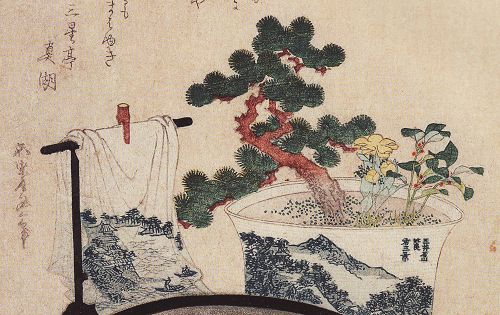
Saturday Snippet: Bonsai Aesthetics

I have been trying to learn the art of bonsai for the last few years (off and on, as it is time-consuming when done well, and I have many other demands on my time). A favorite book is Bonsai Aesthetics: A Practical Guide, by Francois Jeker.

All of us can, in some modest way, create something beautiful. Therefore, the aesthetics of bonsai is something learned. The Japanese codified this art and formalized the rules. Let us try to absorb and understand them. These rules will quickly appear natural to us because they were born from observing nature. The day will come when, with rules forgotten, we will be able to explore new paths.”

I think that captures the advanced stage of most arts: once the artist has mastered the fundamentals, s/he is free to explore and express the individual vision with the depth and nuance of having all the tools. Here is one more favorite “snippet” from Jeker’s book, relating a conversation he had with legendary bonsai master John Naka:

One day I asked John Naka if he talked to his trees. He made a look as if he was angry: ‘Who do you take me for? Bonsai has nothing to do with superstition! Of course I don’t speak to them!

I am content with listening to them …’

I think I need to spend more time listening to trees.
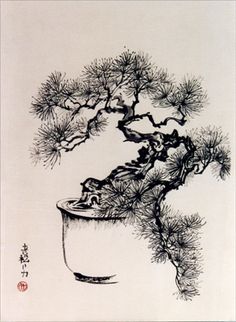
Bonsai Print Sumi-e

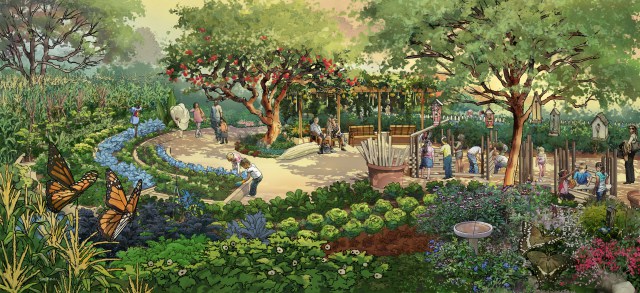
Saturday Snippet: A Child’s Garden

A child’s garden should be a place where children are allowed to run, play, climb, and freely experience natural materials and bodily sensations. Flowers and berries for picking can be planted in exuberant swaths, with paths made perhaps of yellow bricks winding through their beds. Climbing trees and hiding bushes should camouflage every corner. Miniature forests and meadows can be planted, miniature hills mounded, places for digging and constructing set aside. Rabbit hutches and doghouses should be designed with whimsical flair instead of utilitarian drudge. And water is essential — it is children’s (not to mention adults’) favorite outdoor feature.

From A Child’s Garden: Enchanting Outdoor Spaces for Children and Parents, by Molly Dannenmaier.

Saturday Snippet: Moss Gardening

Today’s Saturday Snippet, from Moss Gardening, by George Schenk:

The moss plant earns our respect, even our sense of awe, as one of the world’s lengthier successes in the business of living. Fossil traces confirm an age of moss that goes back about 400 million years, give or take an eon. Moss is older and more lowly than a fern, but higher and more august on life’s ladder than the lichen, that slow sharer of many places where moss lives. On sheer face value, the bun or mat of moss is an impressive creation despite lack of height. Images of the plant probably stand out as clearly in a person’s mind as those of a pine tree, a dandelion, or a head of lettuce. We pause to study moss, especially after a rain, and carry away a lasting impression of a plant velvety green and vibrant and yet soothing. Moss is a human experience well noted.

Photo: http://www.mossandstonegardens.com

Saturday Snippet: Hummingbird, Sage

This week’s Saturday Snippet:

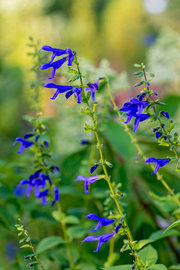
Sometimes when I am weeding in the late afternoon, I hear the vibrating wings of the ruby-throated hummingbird before I see it dipping its beak into the long tubular flowers of the blue anise sage (Salvia guaranitica) called Black and Blue for its cobalt-blue petals and near-black calyxes at the base of the flowers. Hummingbirds are shy, but if I remain perfectly still, it is usually so intent on the nectar inside those deep blue trumpets that I can admire it out of the corner of my eye as it backs out of one flower and moves on to another. Then, in a flash of iridescent green and red, it is gone.

Anne Raver, In The Garden, The New York Times, August 20, 2014.

Photo: Rob Cardillo, The New York Times

Saturday Snippets

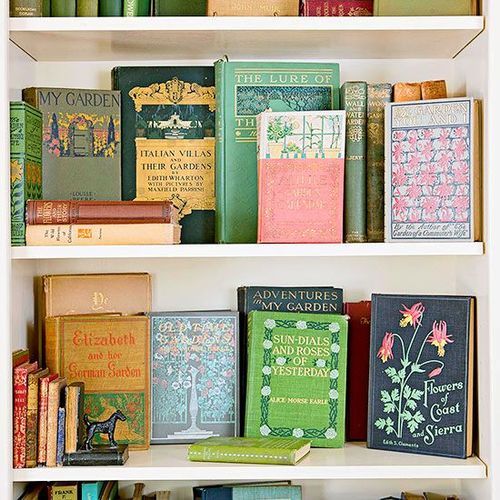
I’m going to add a posting feature to this blog and call it “Saturday Snippets.” As I began with the idea of rediscovering gardening and my many garden-related books, and named the blog after one of my favorites, “Old Herbaceous” by Reginald Arkell, I thought it would be fun to share weekly snippets of garden literature from my collection.

Here’s my first snippet:

“Gardening was a whole-time job, like the cows or the sheep. Cows had to be milked, whatever happened; and who thought of stopping in bed when the sheep were lambing? In a garden, you had to work with the seasons. There were slack times, when you could take an easy with a pipe behind the tool shed, but when the grass started growing and the weeds were getting on top of you, there was an end to all that nonsense….Hours he’d spent watering….But these young fellows….”

Old Herbaceous, Reginald Arkell.

Photo: mustanggina.tumblr.com