Long Time No See …

I can’t believe how long it has been since I posted here, except I can believe it, because I’ve been doing a LOT of gardening instead of writing about gardening. Specifically, in May our next door neighbors approached us to say that their brick wall between our properties was in danger of collapse, and that they could either demolish and rebuild it entirely, or, with our permission, build up the support pillars with buttresses on our side (at their expense). Because the wall runs all along the side of our lot, quite close to our house, and demolition would have been extremely disruptive and destructive, we went with the buttresses.

The good news is that their contractor did an excellent job, the pillar supports look really nice, and he rebuilt or built new raised beds all along our side of the wall, after clearing out all the weedy vines that had grown up over the years. So I’ve spent much of the summer redoing that side of the garden with new hydrangeas and perennials, as well as transplanting others from other parts of the garden. The contractor also cleaned up the pathway on that side and reset the edging bricks and flagstone pavers that were disturbed during the work. So it looks very nice, and I’m excited to see how the new plantings look next spring once they’ve really settled in! Just in time, too, because in March I will be hosting a monthly meeting of a women’s club I’ve joined (retirement is great!), and I want the garden to look its best.

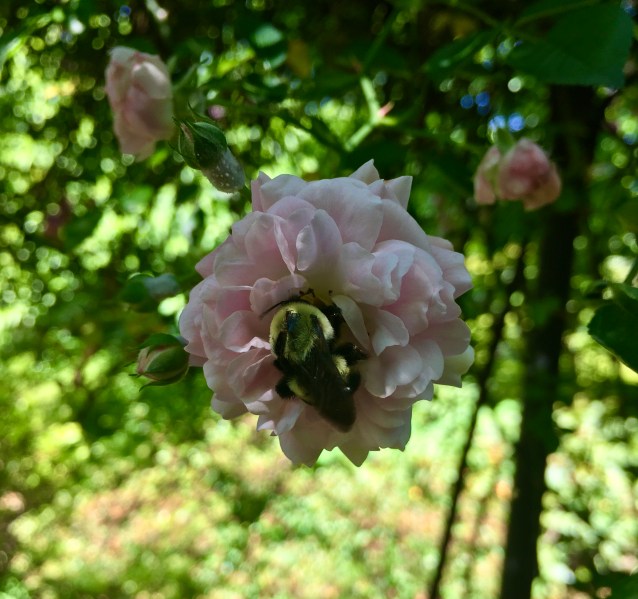
I’ve also continued on my rose “kick”, and their fall flush has been excellent. I’ve even added to my collection, so I’ll be busy repotting several, moving others, and generally getting them ready for colder weather. Not that we’ve seen any of that yet! It is still reaching the 70s during the day, though the nights have been cool.

I’m awaiting a shipment of fall bulbs, mostly daffodils, and this year I plan to take more proactive measures to protect them from the chipmunks that have colonized our back yard. I actually like them, and they don’t do much harm, but they do gobble up bulbs. Supposedly they don’t like daffodils, but I’ve lost too many over the years to fully endorse that theory. So I’ll place plastic netting over my bulb plantings in addition to the usual repellent granules and cross my fingers.

Have you undertaken any garden renovation this year?

Christo Garden

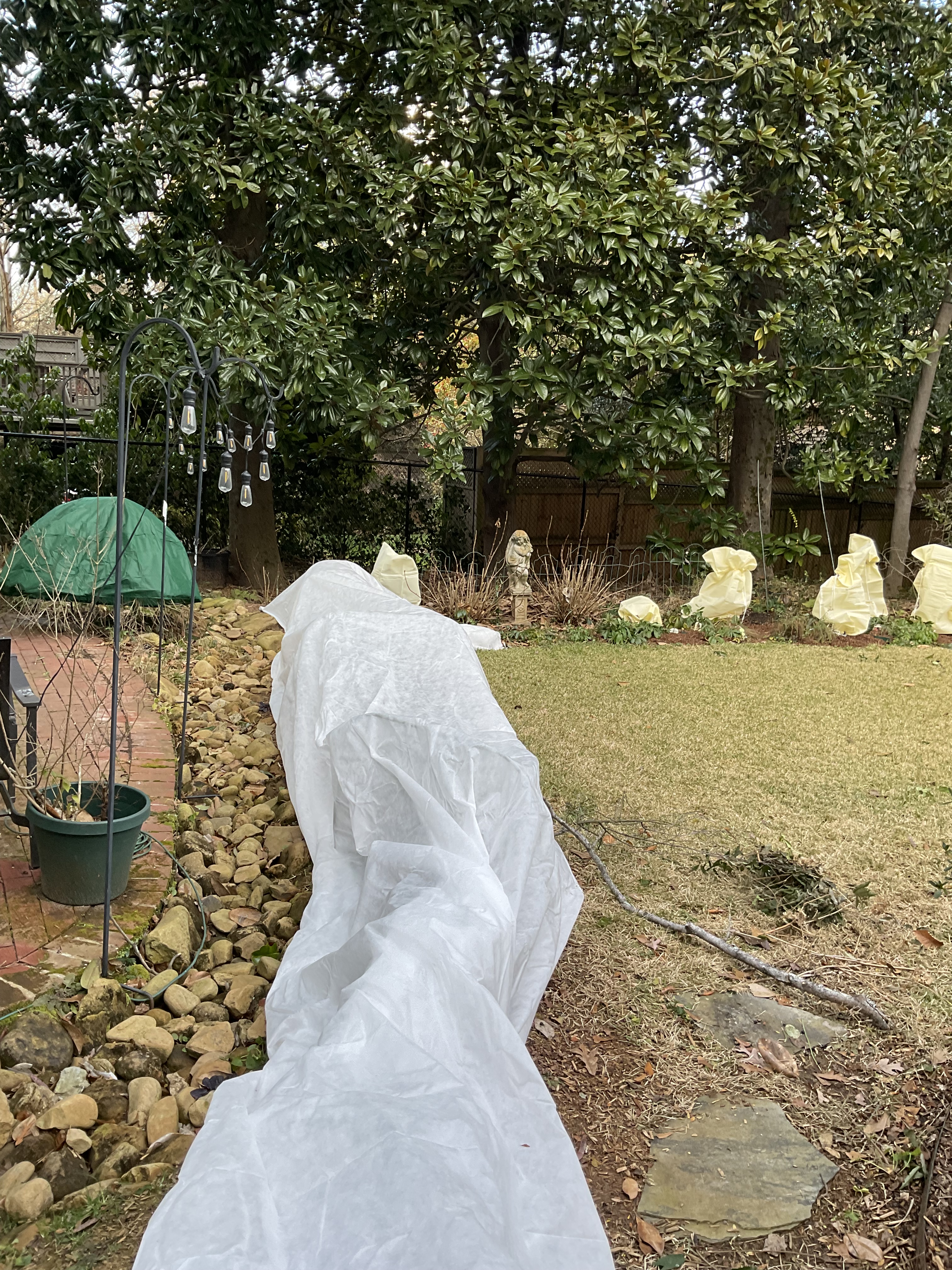
Our newly Zone 8a (we used to be 7b) garden is shivering with unusually cold weather: temperatures in the low teens at night, sometimes not rising above freezing even on sunny days. Because I have a number of newly planted shrubs and some cherished David Austin roses in big pots, and because we suffered plant loss and damage in last winter’s hard freeze, I decided to take more active measures to protect my plants, even though I had already sprayed many of them with Wilt Stop (which I hadn’t done last year).

First, I added a few more inches of mulch to flowerbeds and mixed borders. Then I wrapped large pots with 1/2 inch thick bubble wrap. Next, I covered one row of big pots with newly ordered, heavier frost cloth, secured with clothes pins. Then I placed another length of the same heavier frost cloth over the berm where I lost several lavender plants last year, supported by plant hoops. I put the lighter frost cloth I already had around the tea olive that was hard hit last year but has been growing back nicely, and the Debutante camellia that lives in a pot next to it.

I ordered several frost cloth bags with drawstrings, and those went over the roses I had planted this fall, some in the ground and some in pots. A couple of extra bags went over the still small native azaleas I planted two years ago. A large green frost “planket” was tied down over a cluster of pots with herbs like lavender and sage, and another over a prized Japanese maple. When I shared photos of my work with friends, one of them commented that it looked like a Christo garden, referring to the artist who was famous for his outdoor art installations that involved wrapping of landscape elements.

I hope you and your gardens are well-insulated against the cold!

Il Faut Cultiver Notre Jardin

I haven’t posted here in too long — I spent the month of May posting daily on my other blog, “Serenity Now”, in a “Roses de Mai Marathon” of rose-centered fragrances. It was great fun, and it took my mind off the ongoing pandemic, social isolation, etc. I am privileged to be able to work from home, so my employment has not been interrupted; and my family are all safe and well, which is such a blessing.

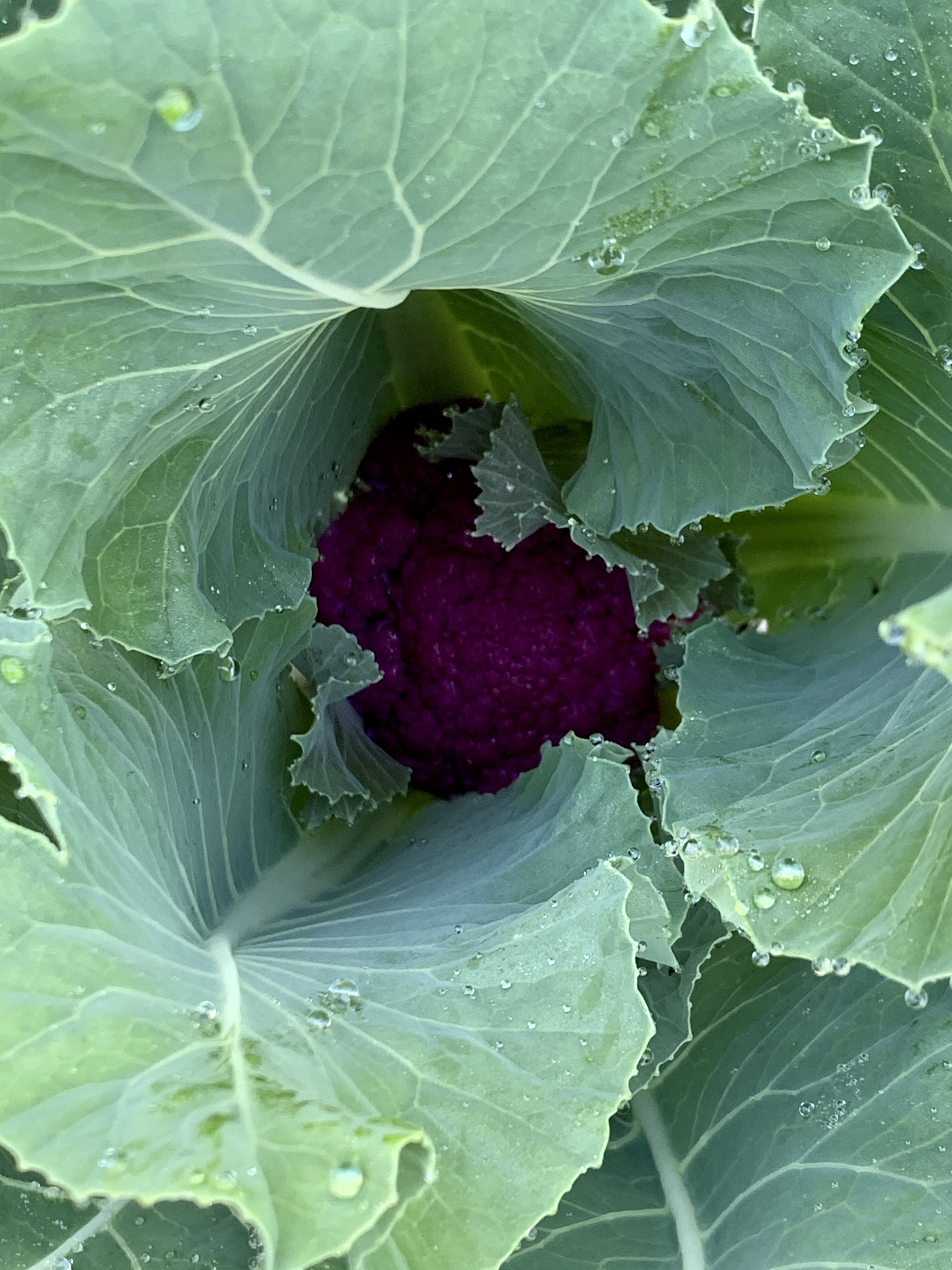
The events of the last ten days here in America have been astounding, and it is taking me a while to process them. Meanwhile, we have had a beautiful spring; my own roses have been spectacular (and are now starting a second flush of bloom), and I’ve planted what I call my “virus victory vegetable garden”, which is flourishing. We’ve already harvested our first purple cauliflower, which got much bigger than the photo below, and it was delicious!

The peace and beauty of my city garden, and the weather, contrast so much with the conflict just outside my neighborhood. It is quite jarring, and my husband and I comment on that dissonance often on our regular walks. I’ve been thinking a lot about Voltaire’s famous ending phrase from his novel Candide, “Il faut cultiver notre jardin.” What does it mean?

Literally, in English, it means “We must cultivate our garden.” Sometimes that is taken to mean that it is useless to try to understand or counter the wider world’s troubles, and that all one can do is retreat to one’s own garden.

Tempting as that is, for an introverted gardener like myself, I don’t think that’s it. Or maybe, I prefer to think that’s not it. Adam Gopnik wrote in “The New Yorker” magazine, some years ago, in response to a translator who translated it as “We need to work our fields” (which implies something very different):

By “garden” Voltaire meant a garden, not a field—not the land and task to which we are chained by nature but the better place we build by love. The force of that last great injunction, “We must cultivate our garden,” is that our responsibility is local, and concentrated on immediate action.

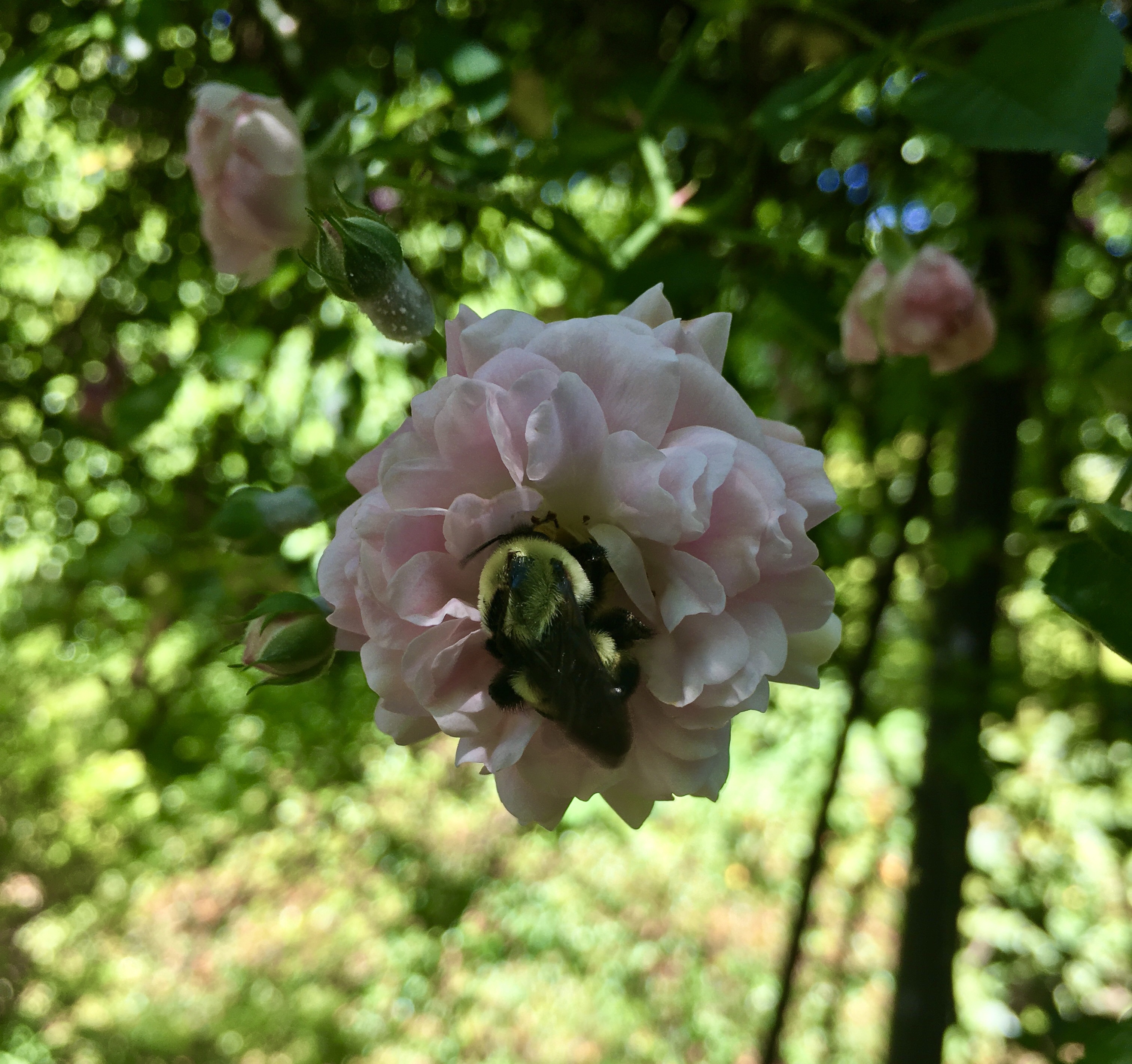
Whether or not that is what Voltaire intended over 250 years ago, that resonates with me. So I will cultivate both roses and vegetables in my actual garden, and I will do my best to fulfill my immediate and local responsibilities to advance justice and peace, and build a better place by love. Right here, right now, where I live. After all, bees love flowers, but they are also symbols of peaceful, industrious activity, and community.

If you’ve read this far, I hope you and your family, and your garden, are staying safe and well.

Daffodils, overnight!

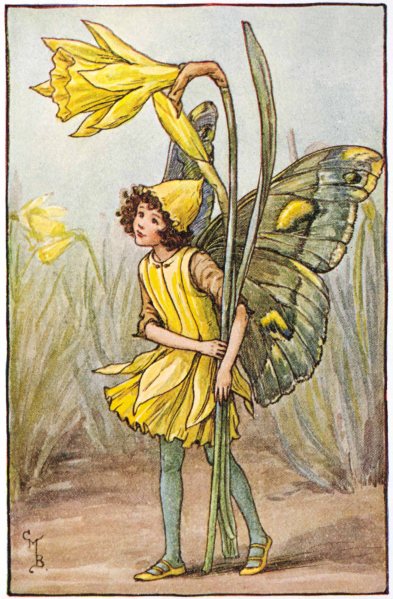
Cicely Mary Barker, The Daffodil Fairy, www.flowerfairies.com

We had a very warm couple of days but then the weather turned gray, gloomy and cold again, with only a sprinkle of snowdrops and one lone narcissus up to prove that I had in fact labored long and hard to plant dozens of new bulbs for this spring. Imagine my delight, then, when I got up this morning to find three whole patches of early daffodils in bloom!

I love daffodils — they may be my favorite flower, inching ahead of hyacinths, roses, and even lilies of the valley. I’m always so happy to see their brightness against what still looks like a wintry, though snow-free, landscape. Do you have bulbs coming up yet? What are your favorites?

Featured image: The Daffodil Fairy, by Cicely Mary Barker.

Saturday Snippet: Le Petit Prince

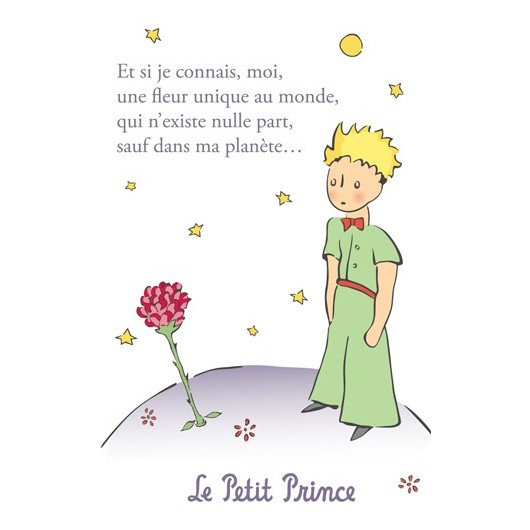
Illustration and quotation from Le Petit Prince, by Antoine de Saint-Exupery

This is a tardy Saturday Snippet, posted on a Sunday because I spent most of yesterday actually planting things in my garden! But I have the perfect reason to post this weekend, complete with literary tie-in: my new rosebush, Le Petit Prince.

Also known as La Rose du Petit Prince, this beautiful rose is named for the classic novella Le Petit Prince, by Antoine de Saint-Exupery, which features a Rose who is the Little Prince’s responsibility and love, in spite of her flaws.

Illustration from Le Petit Prince by Antoine de Saint-Exupery.

But here’s some additional, wonderful information about the actual rose, from the blog www.thelittleprince.com:

“For over 50 years the Pépinières et Roseraies Georges Delbard nursery gardeners have been creating exceptional roses. Very possibly you have a Claude Monet or Comtesse de Ségur rose bush growing in your garden … It was back in 2008 that they first thought of creating the Little Prince rose in partnership with the Petits Princes Association! It was altogether fitting that the celebrated little fair-haired Prince who was so attached to his flower should have a rose named after him. With its beautiful mauve petals with hints of violet, the Little Prince Rose reminds us of both the sweetness and the power of children’s dreams. This admirable partnership hoped by means of this initiative to send a message of hope to all sick children. For each rose bush sold, 2 euros are paid to the association, in order to perpetuate their action.

This very beautiful rose has also won several awards in the context of the Grand Prix de la Rose. This year it won the 1st prize, thanks above all to its original scent!”

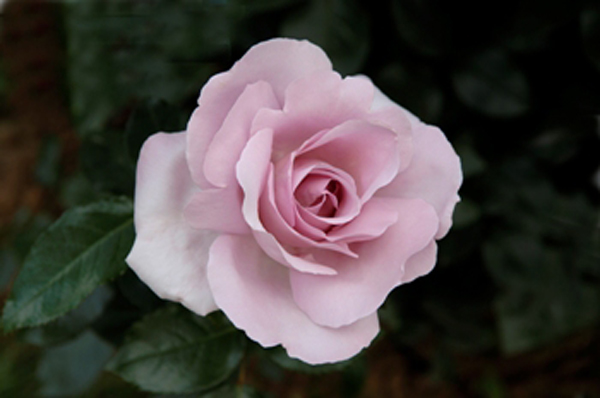
When I saw this rose at the local garden center, with flowers that read more of a pale pink to my eyes than mauve, then read its name, and smelled its heavenly, lemony-rose fragrance, I knew this little prince had to come home with me.

Pépinières et Roseraies Georges Delbard's rose hybrid Le Petit Prince, or La Rose du Petit Prince
Rose Le Petit Prince; or La Rose du Petit Prince.

One of the most famous passages in Le Petit Prince describes the little prince’s leave-taking from the fox he has tamed, at the fox’s own request:

“Go and look again at the roses. You will understand now that yours is unique in all the world. Then come back to say goodbye to me, and I will make you a present of a secret.”

The little prince went away, to look again at the roses.

“You are not at all like my rose,” he said. “As yet you are nothing. No one has tamed you, and you have tamed no one. You are like my fox when I first knew him. He was only a fox like a hundred thousand other foxes. But I have made him my friend, and now he is unique in all the world.”

And the roses were very much embarassed.

“You are beautiful, but you are empty,” he went on. “One could not die for you. To be sure, an ordinary passerby would think that my rose looked just like you–the rose that belongs to me. But in herself alone she is more important than all the hundreds of you other roses: because it is she that I have watered; because it is she that I have put under the glass globe; because it is she that I have sheltered behind the screen; because it is for her that I have killed the caterpillars (except the two or three that we saved to become butterflies); because it is she that I have listened to, when she grumbled, or boasted, or even sometimes when she said nothing. Because she is my rose.

And he went back to meet the fox.

“Goodbye,” he said.

“Goodbye,” said the fox. “And now here is my secret, a very simple secret: It is only with the heart that one can see rightly; what is essential is invisible to the eye.”

“What is essential is invisible to the eye,” the little prince repeated, so that he would be sure to remember.

“It is the time you have wasted for your rose that makes your rose so important.”

“It is the time I have wasted for my rose–” said the little prince, so that he would be sure to remember.

“Men have forgotten this truth,” said the fox. “But you must not forget it. You become responsible, forever, for what you have tamed. You are responsible for your rose . . .”

“I am responsible for my rose,” the little prince repeated, so that he would be sure to remember.

Welcome to my garden, Little Prince!

Featured illustrations: from Le Petit Prince, by Antoine de Saint-Exupery; in public domain in the U.S., still copyrighted in France.

Saturday Snippet: Introducing…Capability — David Austin Wedding Roses

FOR IMMEDIATE RELEASE | Contact: Eleanor Clevenger David Austin Roses Introduces An Exceptional New Variety — CAPABILITY (Ausapply) Luxury cut-garden rose is perfect choice for weddings, events and home decor. ALBRIGHTON, UK — Oct. 12, 2016 — David Austin Roses is pleased to announce the addition of a new cut rose variety: CAPABILITY (Ausapply),…

via Introducing…Capability — David Austin Wedding Roses

Isn’t this new rose just beautiful??

Saturday Tipple, Not Snippet!

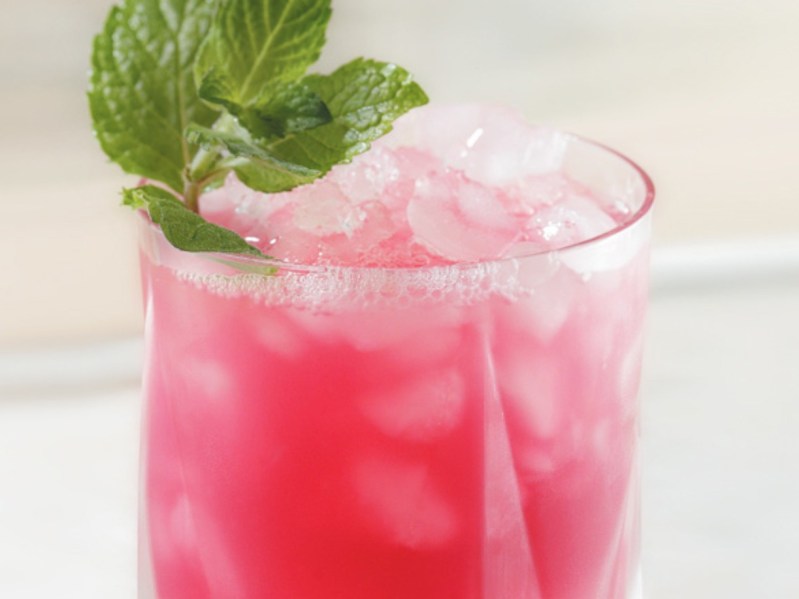
Pink summer cocktail made with Fentimans Rose Lemonade and Hendricks Gin, a small-batch Scottish gin with rose, cucumber and botanical extracts

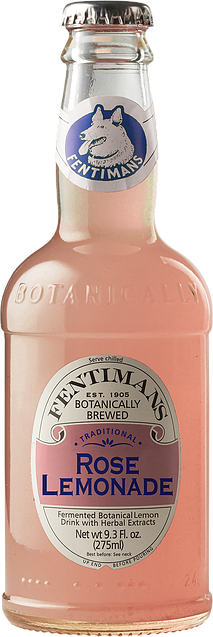
While I was in the UK with my family, I tried for the first time the most divine drink: Fentimans Rose Lemonade. It is delicious on its own — it really smells like roses and tastes the way roses smell! And it’s pink! Just lovely.

Bottle of Fentiman's pink Rose Lemonade soft drink
Fentimans Rose Lemonade; image: Fentimans

When we got home, I found a local store that carries it. Hurray! Bought two large bottles and promptly started to think, what else can I do with this yummy beverage? Aha — a summer cocktail! So I made one up. I am posting the recipe on my “Old Herbaceous” blog because Fentimans refers to its Rose Lemonade as “botanically brewed” and describes its composition as “fermented botanical lemon drink with herbal extracts”; and because the cocktail is based on Hendrick’s Gin, a small-batch Scottish gin infused with rose and cucumber extracts, plus other botanicals: “Hendrick’s wondrous botanical signature consists of flowers, roots, fruits, and seeds from the world over. They function to complement and set the stage for our delicious duet of infusions: rose petal and cucumber.”

Illustration of bottle of Hendrick's Gin, a small-batch Scottish gin made with botanical extracts
Hendrick’s Gin; image from us.hendricksgin.com

So here is the recipe for what my daughter calls “Rosie the Riveter”, although I’m trying to think of a more romantic, ladylike name to match the pale pink color with light green accents; and there is already a different cocktail named Rosie the Riveter, which I only discovered after I came up with mine and Googled the name. Maybe I’ll call it “Scepter’d Isle”, after Shakespeare and the gorgeous David Austin English Rose of that name, inspired by Susan Rushton’s beautiful photographs! What do you think?

Old Herbaceous’ Rosie the Riveter Cocktail (or Scepter’d Isle):

Fill a tall glass halfway with ice (cubes or crushed).

Add one jigger of Hendrick’s Gin.

Fill the rest of the glass with Fentimans Rose Lemonade.

Add five drops of rose water, 1-3 thin slices of cucumber, one sprig of fresh mint leaves.

Enjoy!

Next stop: the bar “Fragrances” at the Ritz-Carlton, Berlin, which serves cocktails inspired by legendary perfumes. I’ve never been there, have you?