Just had to reblog this, not just because of the gorgeous photos but because of the phrase “all manner of early autumn herbaceous-ness”! Thank you Martin Ogden!
Saturday Snippet: Bonsai Aesthetics
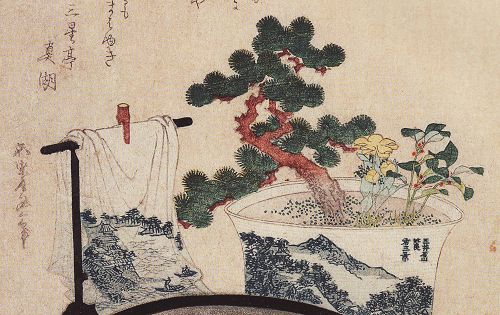
I have been trying to learn the art of bonsai for the last few years (off and on, as it is time-consuming when done well, and I have many other demands on my time). A favorite book is Bonsai Aesthetics: A Practical Guide, by Francois Jeker.
All of us can, in some modest way, create something beautiful. Therefore, the aesthetics of bonsai is something learned. The Japanese codified this art and formalized the rules. Let us try to absorb and understand them. These rules will quickly appear natural to us because they were born from observing nature. The day will come when, with rules forgotten, we will be able to explore new paths.”
I think that captures the advanced stage of most arts: once the artist has mastered the fundamentals, s/he is free to explore and express the individual vision with the depth and nuance of having all the tools. Here is one more favorite “snippet” from Jeker’s book, relating a conversation he had with legendary bonsai master John Naka:
One day I asked John Naka if he talked to his trees. He made a look as if he was angry: ‘Who do you take me for? Bonsai has nothing to do with superstition! Of course I don’t speak to them!
I am content with listening to them …’
I think I need to spend more time listening to trees.
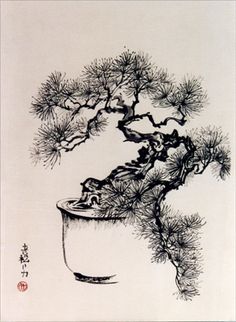
Saturday Snippet: A Child’s Garden
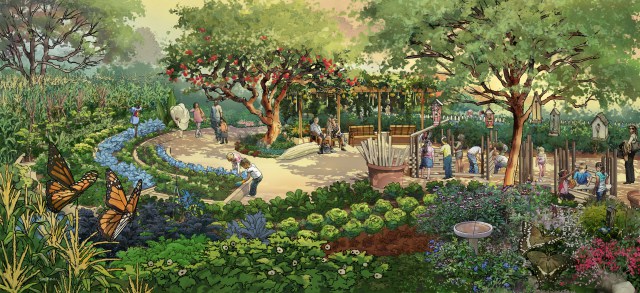
A child’s garden should be a place where children are allowed to run, play, climb, and freely experience natural materials and bodily sensations. Flowers and berries for picking can be planted in exuberant swaths, with paths made perhaps of yellow bricks winding through their beds. Climbing trees and hiding bushes should camouflage every corner. Miniature forests and meadows can be planted, miniature hills mounded, places for digging and constructing set aside. Rabbit hutches and doghouses should be designed with whimsical flair instead of utilitarian drudge. And water is essential — it is children’s (not to mention adults’) favorite outdoor feature.
From A Child’s Garden: Enchanting Outdoor Spaces for Children and Parents, by Molly Dannenmaier.
Fairy House Tour
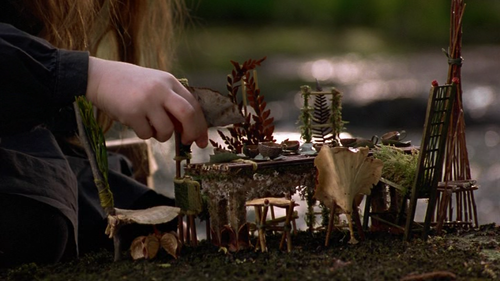
Judy at New England Garden and Thread casually mentioned in a comment on her latest post that she used to take part in the annual Portsmouth Fairy House Tour. How did I not know about this?? Adding this to my bucket list of things to do when next we visit relatives in NH; will have to time visit accordingly! Apparently this tour is the world’s largest fairy houses event.
What is a fairy house, you may ask? From Tracy Kane at FairyHouses.com: “Fairy Houses are small structures for the fairies and nature’s friends to visit. Sticks, bark, dry grasses, pebbles, shells, feathers, seaweed, pine cones and nuts are just some of the natural materials that can be used. Ranging from simple to intricate ‘Fairy Mansions’, these whimsical habitats are built by children, families, gardeners and nature lovers reflecting their creativity, joy and pride.” Tracy and Barry Kane have written and photographed a charming series of books with ideas for fairy houses, as well as a guidebook for children about making their own. You can find a gallery of their photographs here: FairyHouses.com Photo Gallery. We had a couple of these books when my children were small and we had a lot of fun with them.
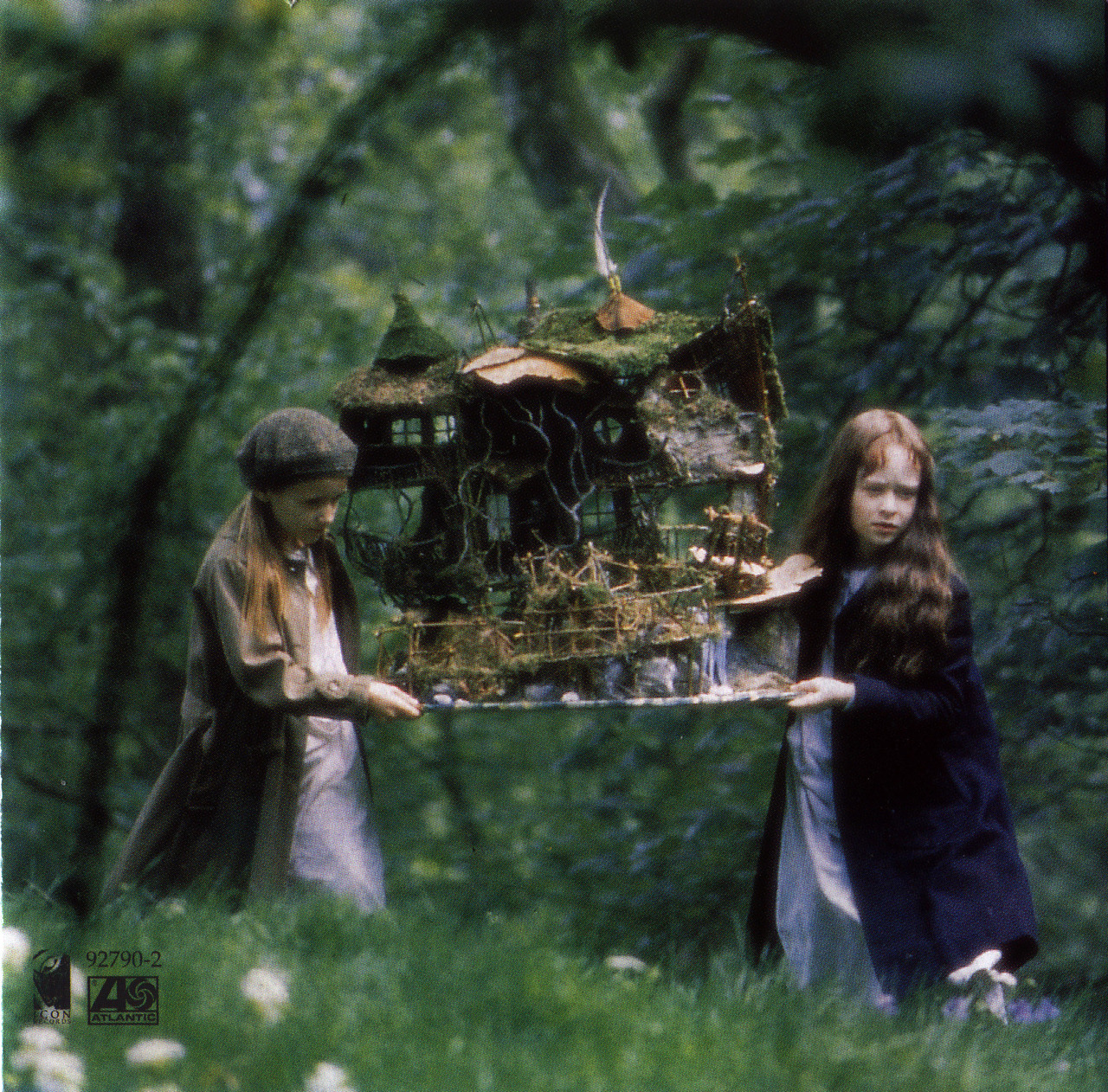
On a related note, one of our favorite movies has been “FairyTale: A True Story.” It is the film based on the actual incident of two girls who were believed to have taken real-life photos of real fairies in Yorkshire, just after World War I (the “Cottingley Fairies”). They became minor celebrities, promoted by the likes of Sir Arthur Conan Doyle. Part of the movie’s story involves elaborate fairy houses built by the deceased, artistic older brother of one of the girls, who died at the age of ten.
My children are no longer interested in fairy houses or fairy tales but maybe, as C.S. Lewis once wrote, maybe someday they will be old enough to start reading fairy tales again. I think I’m there.
Saturday Snippet: Moss Gardening

Today’s Saturday Snippet, from Moss Gardening, by George Schenk:
The moss plant earns our respect, even our sense of awe, as one of the world’s lengthier successes in the business of living. Fossil traces confirm an age of moss that goes back about 400 million years, give or take an eon. Moss is older and more lowly than a fern, but higher and more august on life’s ladder than the lichen, that slow sharer of many places where moss lives. On sheer face value, the bun or mat of moss is an impressive creation despite lack of height. Images of the plant probably stand out as clearly in a person’s mind as those of a pine tree, a dandelion, or a head of lettuce. We pause to study moss, especially after a rain, and carry away a lasting impression of a plant velvety green and vibrant and yet soothing. Moss is a human experience well noted.
Saturday Snippet: Hummingbird, Sage
This week’s Saturday Snippet:
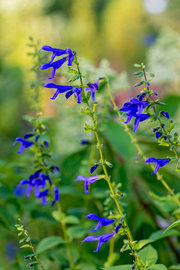
Sometimes when I am weeding in the late afternoon, I hear the vibrating wings of the ruby-throated hummingbird before I see it dipping its beak into the long tubular flowers of the blue anise sage (Salvia guaranitica) called Black and Blue for its cobalt-blue petals and near-black calyxes at the base of the flowers. Hummingbirds are shy, but if I remain perfectly still, it is usually so intent on the nectar inside those deep blue trumpets that I can admire it out of the corner of my eye as it backs out of one flower and moves on to another. Then, in a flash of iridescent green and red, it is gone.
Anne Raver, In The Garden, The New York Times, August 20, 2014.
Garden inspiration – past and present
And now for some inspiration from women garden designers who are English!
New Hampshire Wildflowers
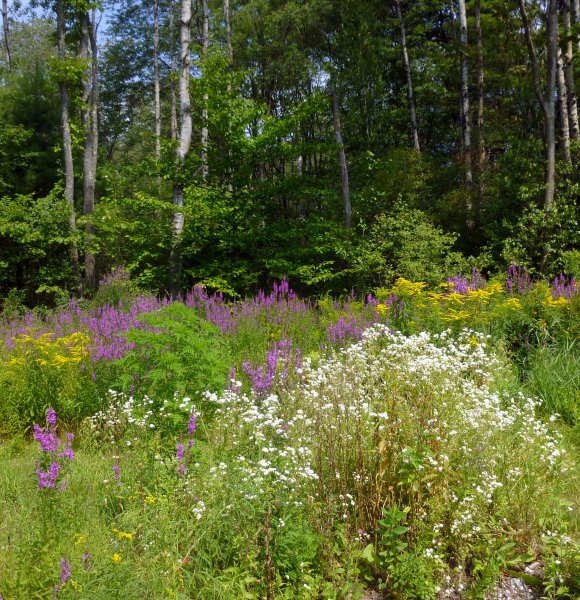
Visiting New Hampshire in August, I am struck again by the beauty of the roadside wildflowers and other plants. Queen Anne’s Lace is a favorite, in bloom at the same time as goldenrod. Invasive pest that it is, the purple loosestrife is also pretty this time of year. Lots of green ferns at the woods’ edges, and wonderful carpets of green moss and silvery grey-green lichens, leading toward the occasional pops of white birches against the dark green of surrounding trees. And in flowerbeds, the hostas are in peak form, leafed out but not yet bedraggled, flower spikes just starting to bloom and without any faded blossoms. Hybrid and wild daylilies are blooming, as are the magenta flowers of echinacea. Summer in New England. Ahhhh.
Photo: nhgardensolutions.wordpress.com
Gibbs Gardens and White Flowers
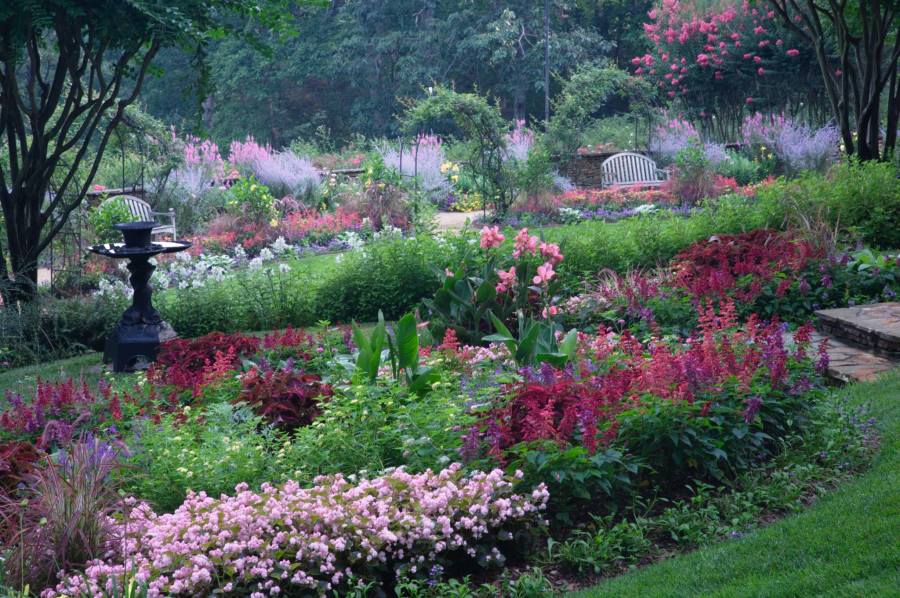
On my bucket list to visit: Gibbs Gardens in northeast Georgia. Gibbs Gardens was built by Jim Gibbs, the now-retired founder and head of a major Atlanta landscaping company. Now open to the public, the Gardens cover 220 acres of his 292-acre property in Cherokee county. By the numbers: 3 feature gardens, 16 separate gardens, 19 waterfalls, 24 ponds, 32 bridges. Among many notable features are a Japanese Garden and the annual spring display of daffodils, said to be one of the most spectacular outside Holland.
Until I get there in person, I can follow what’s happening and get some gardening advice from the Gibbs Gardens blog, co-written by Jim Gibbs and Erica Glasener, who hosts the HGTV show “A Gardener’s Diary” and has written several gardening books as well as articles about Southern gardening and gardening in Georgia. Here is her latest post, about white flowers in the summer garden: Summer Whites.
As I have a love affair with Japanese maples, I think I’ll time my visit to see their color in the fall at the Japanese Garden. Can’t wait!
Early American Women Garden Designers and Horticulturists – a brief summation

This is a wonderful overview of several early American garden designers who were women and thus somewhat overlooked these days, with the possible exception of Beatrix Farrand.

Despite scholarly work and books, the contributions of American women in garden design and landscape architecture have not received their recognition as those of their overseas contemporaries have. Perhaps due to United States’ European colonial history, Americans have looked towards Europe for inspiration and with varying degrees of success attempted to replicate the styles here. And there is no discounting the romantic appeal of the Edwardian flower borders, the Italianate waterworks, and Grecian ruins, all of which were not created in a nascent country. Well-do Americans increasingly made the trans-Atlantic journey to visit and see them, and certainly returned home, buoyant from their travels and receptive for a piece of ‘Europe’.
During my research into the ‘tropicalismo’ or ‘Victorian subtropical bedding’ in North America, I began to note the regularity with which the same female names appeared in magazines and books. These women boasted distinguished careers as strong as Gertrude…
View original post 799 more words
 Old Herbaceous