Second Winter

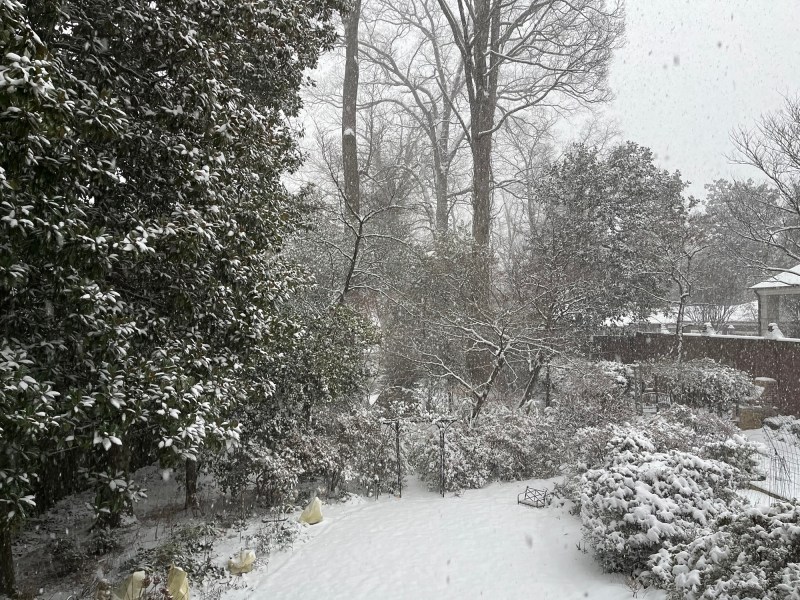
Here in the South, we .i,e to joke that we have twelve or more seasons, which include “first winter”, “false spring”, “second winter”, etc. We are now in the throes of “second winter”, as proven by this morning’s snowfall. It was so pretty as it came down! And now my garden is blanketed in white.
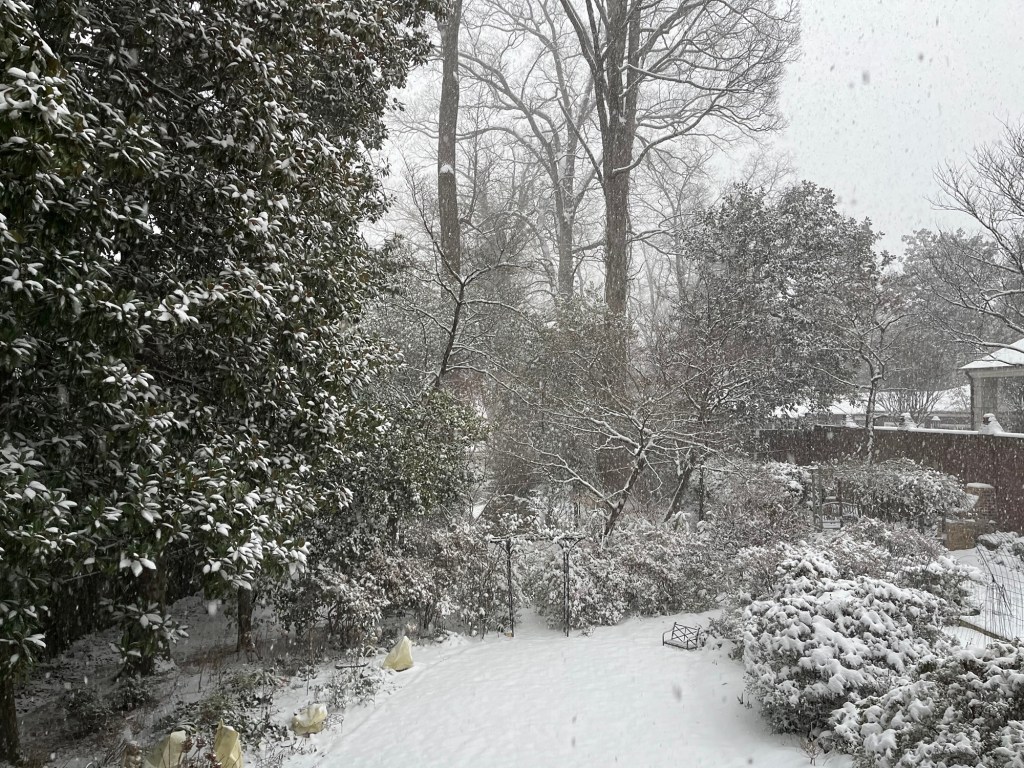
Snowy day

I haven’t had to go to the lengths I did last January, when the temps dropped so low, without the insulation of snow, that I wrapped many shrubs in frost covers: Christo Garden. I covered just a few new or small ones, though I did put bubble wrap around most of my pots, reusing what I kept from last year.

Our elderly dog Lucy is completely unimpressed by the snow, and barely went outside early this morning before it really came down. She prefers her warm bed, the sensible girl!

I’m just glad I got the last bags of bulbs into the ground last weekend! I have a few more to put in pots, but they’re fine getting chilled in my garden shed for now.

Happy New Year and Second Winter!

Christo Garden

Our newly Zone 8a (we used to be 7b) garden is shivering with unusually cold weather: temperatures in the low teens at night, sometimes not rising above freezing even on sunny days. Because I have a number of newly planted shrubs and some cherished David Austin roses in big pots, and because we suffered plant loss and damage in last winter’s hard freeze, I decided to take more active measures to protect my plants, even though I had already sprayed many of them with Wilt Stop (which I hadn’t done last year).

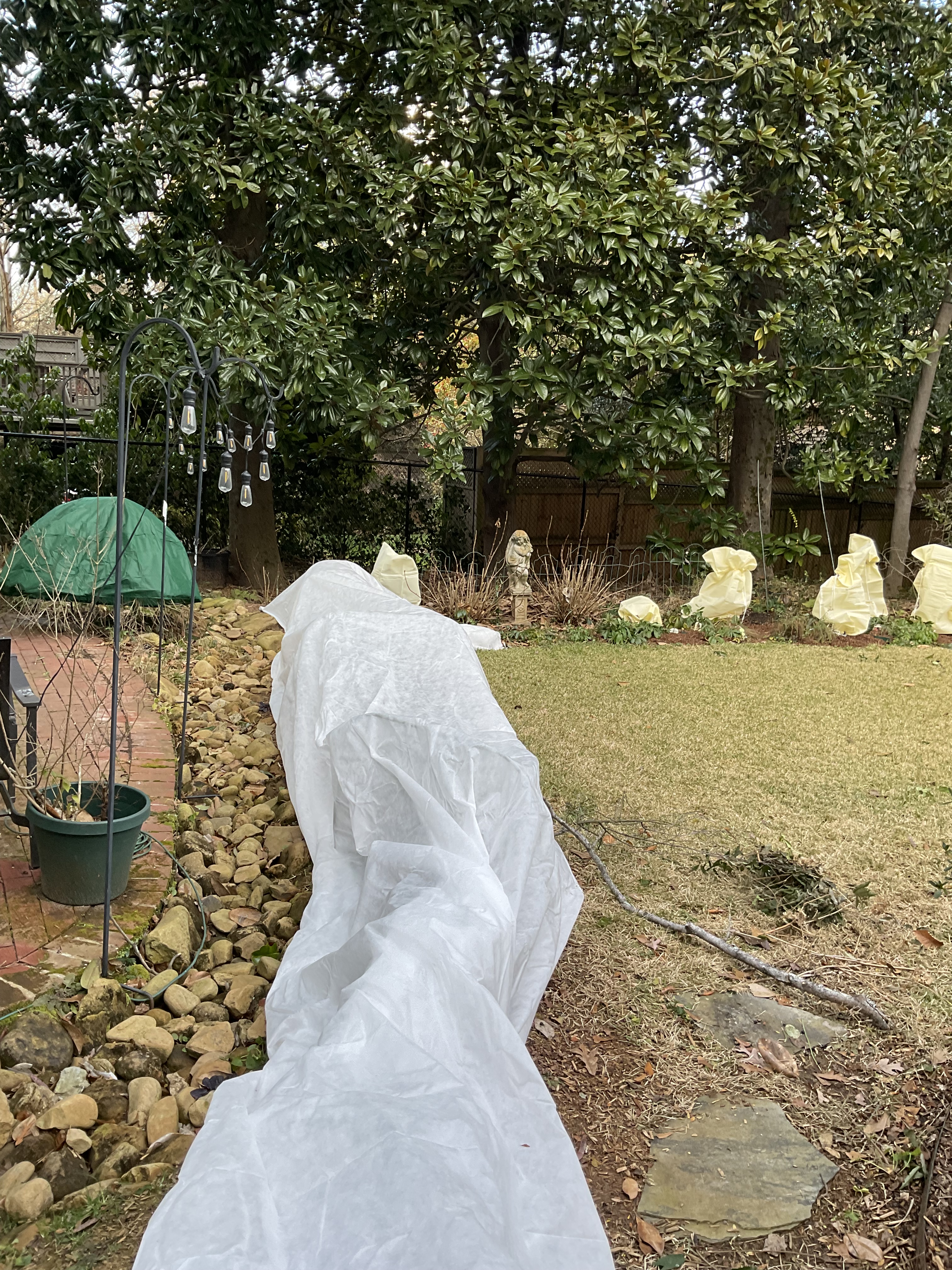
First, I added a few more inches of mulch to flowerbeds and mixed borders. Then I wrapped large pots with 1/2 inch thick bubble wrap. Next, I covered one row of big pots with newly ordered, heavier frost cloth, secured with clothes pins. Then I placed another length of the same heavier frost cloth over the berm where I lost several lavender plants last year, supported by plant hoops. I put the lighter frost cloth I already had around the tea olive that was hard hit last year but has been growing back nicely, and the Debutante camellia that lives in a pot next to it.

I ordered several frost cloth bags with drawstrings, and those went over the roses I had planted this fall, some in the ground and some in pots. A couple of extra bags went over the still small native azaleas I planted two years ago. A large green frost “planket” was tied down over a cluster of pots with herbs like lavender and sage, and another over a prized Japanese maple. When I shared photos of my work with friends, one of them commented that it looked like a Christo garden, referring to the artist who was famous for his outdoor art installations that involved wrapping of landscape elements.

I hope you and your gardens are well-insulated against the cold!

The Winter Garden

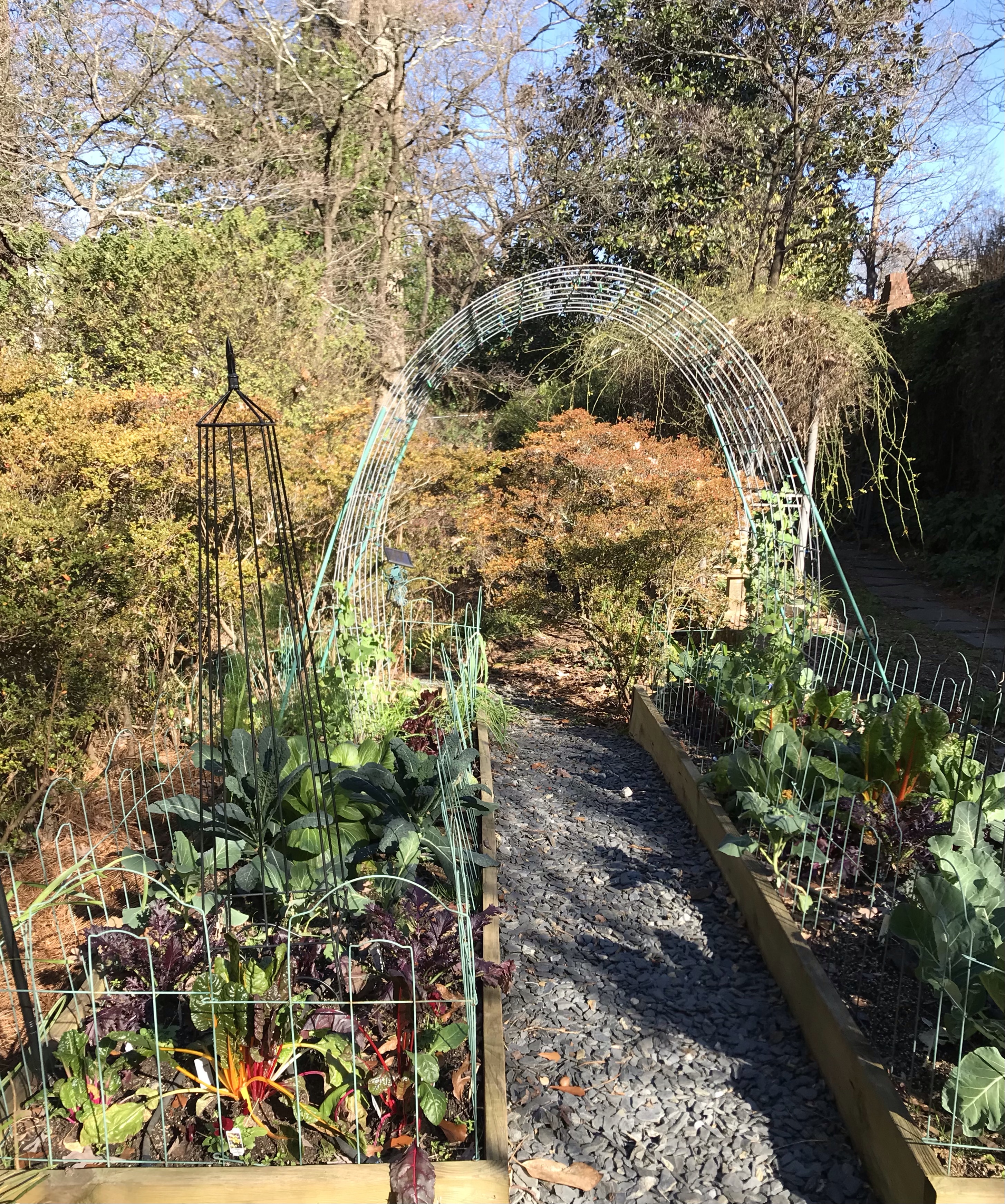
I’m quite pleased with how well my winter vegetable garden is doing. I love planting all the colorful winter leafy greens, like rainbow chard, red romaine, purple mustard, “Bull’s Blood” beets, different kinds of kale. I’m even growing cauliflower whose heads will be orange or purple! I have a few pea vines, mostly for their looks although they are thriving. I learned a year ago that it takes a LOT of pea plants to get enough shelled peas for one meal! I also enjoy planting pansies among the vegetables and herbs, as they will bloom all winter in this climate. Finally, there are many fewer weeds in the winter, at a level I can manage to keep under control.

Are you growing and planting in this season?

Hellebores – to leave or unleaf? — GardenRant

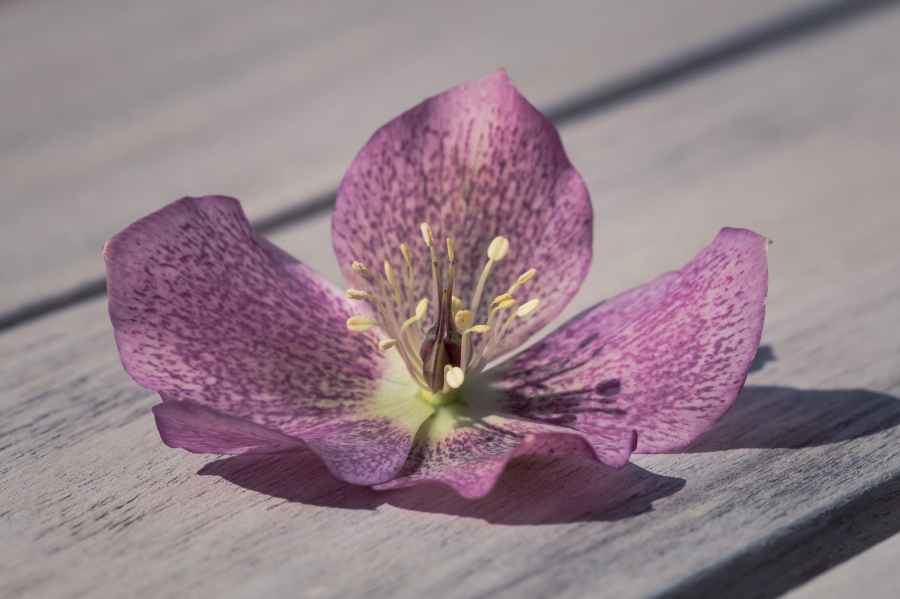
A timely piece by Anne Wareham, about the hellebores that are starting to bloom.

We probably all love hellebores, but some people seem to like them leafy and some people like them naked. And sometimes the plants themselves seem to come kind of in-between.  Aren’t they glorious? So why de-leaf? The biggest reason may be Leaf Spot. I really know nothing about this – we may have it, or…

Hellebores – to leave or unleaf? — GardenRant

Winter Vegetable Garden

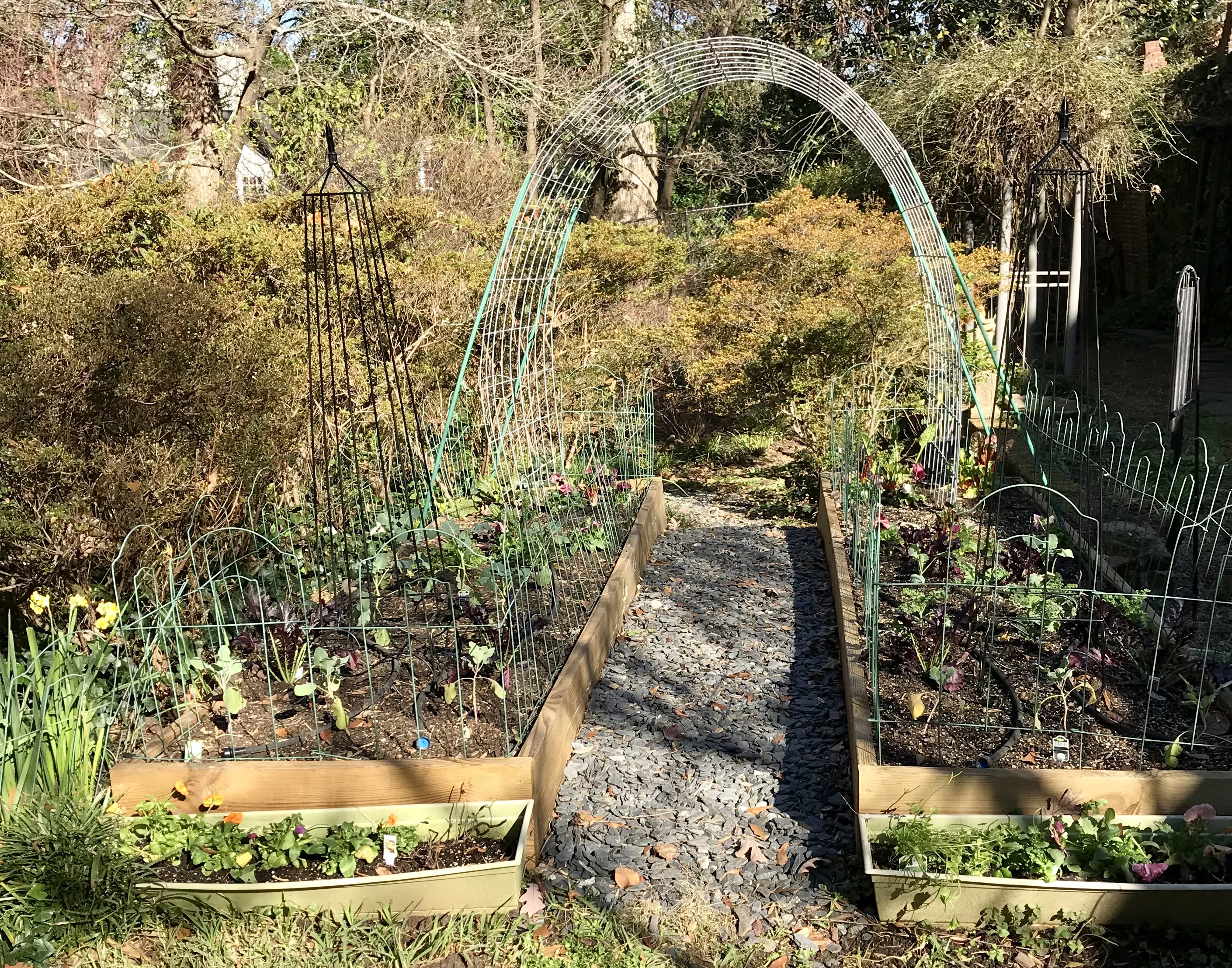
My replanted winter vegetable garden! Some of you may recall that I had high ambitions, last summer, of posting regular snapshots of my summer vegetable garden in the new raised beds I had built for my garden last spring. Alas! Between summer trips to see family, and a long, hot, wet summer, plus planting too many bean vines, my summer vegetable garden turned into a veritable jungle, complete with aggressive mosquitoes.

So this fall, we cleared the whole thing out, pulled hyacinth bean vines off everything (seriously, they went everywhere!), and started over with cool season vegetables and flowers. I have beets with gorgeous maroon leaves; Swiss chard with brightly colored stems; red mustard; curly kale; broccoli; cauliflower; parsley; and, of course, pansies. 

Among my containers, I still have lots of herbs that are flourishing; and several roses that have decided to embark on a third or even fourth flush of bloom. Yes, we’ve had unseasonably warm weather; and on Boxing Day, yesterday, it was in the mid-70s! No wonder my poor roses are confused. But the warm weather will help my vegetables get a good start rooting, I think, before it turns cold as expected in January and February.

Are you able to garden at this time of year? What will you grow? Happy New Year to all, and may 2022 bring us increases in health and happiness.

My renovated winter vegetable garden

Climate Confusion

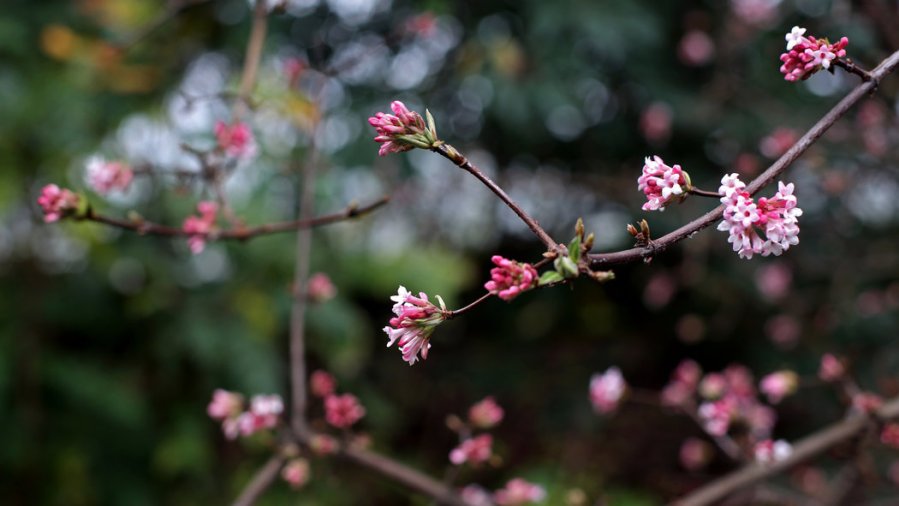
It is mid-February, and we have experienced temperature swings from the high 20s F to the low 70s F in less than two weeks! We’ve also had a LOT of rain. My garden is so confused, as are all the gardens in my neighborhood. Winter blossoms are still flowering (hellebores, mahonias, winter annuals like violas, pansies, dianthus, sweet alyssum), spring bulbs are opening (hello, daffodils!), and confused vines, shrubs, and trees that normally flower in March have decided to start blossoming early (Coral Bells azaleas, Clematis armandii, and Magnolia soulangeana).

Clematis armandii in bloom, March 2019
Clematis armandii, mid-March 2019.


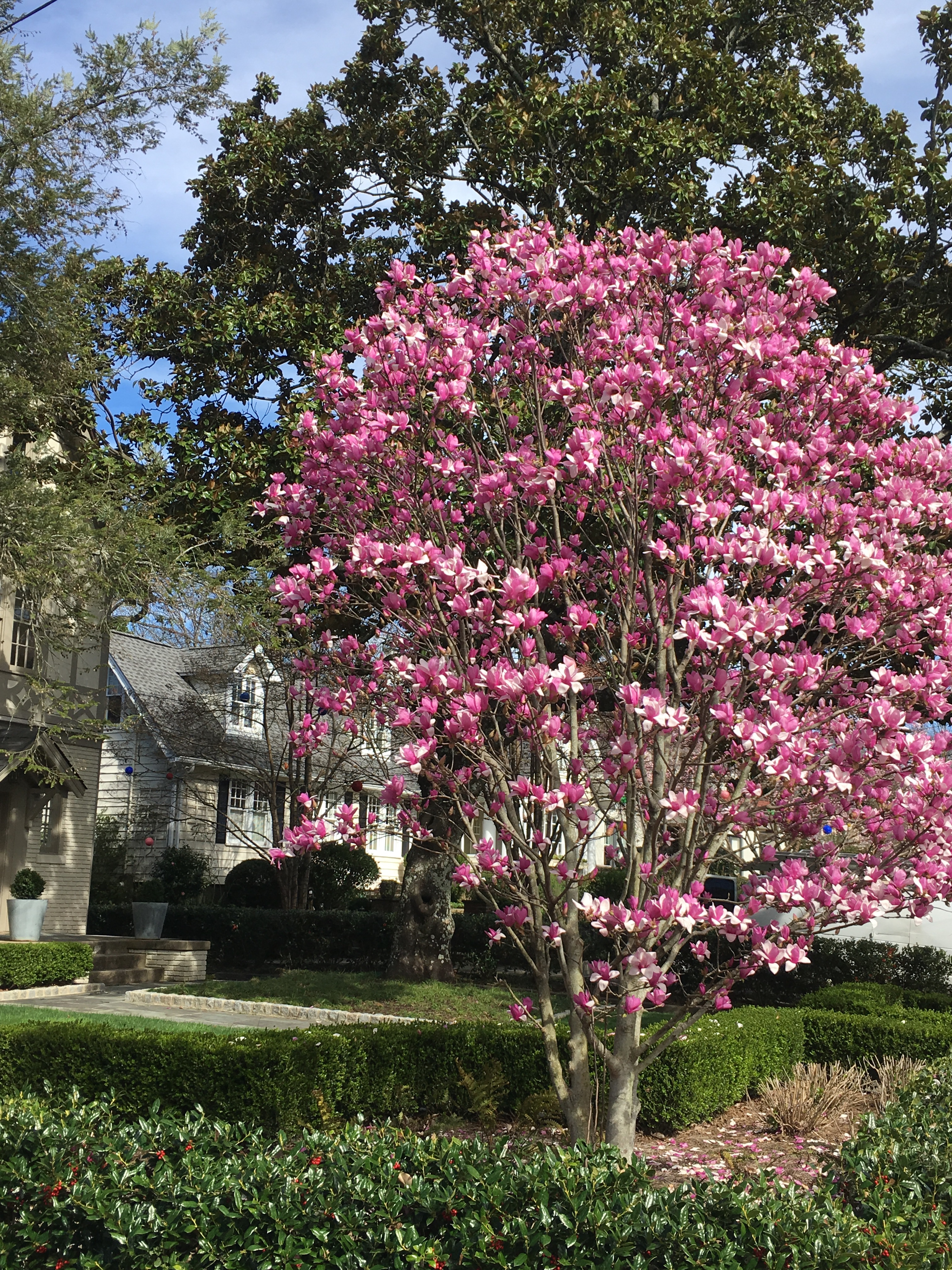
Of them all, the only ones that I fear will suffer from the upcoming frost are the saucer magnolias, whose fragrant pink flowers will likely turn brown and drop. So sad, as they are one of my favorite trees and they scent the air with an incomparable fragrance! I hope some of the magnolias in my neighborhood will hold off long enough to provide abundant blossoms after next weekend, when we expect another frost. I don’t (yet) have a saucer magnolia in my own garden, but if/when I plant one, I will try to choose a later-blooming variety as well as a more compact one. Any suggestions?

Blossoming pink saucer magnolia
Magnolia soulangeana; mid-March 2019.

Saturday Snippet: Spring in Winter

It has been so unseasonably warm here that temperatures have regularly reached 70 degrees Fahrenheit all December. As the New York Times points out, gardens and gardeners are confused: December Heat Tricks Flowers Into Putting On Spring Display. Today’s Saturday Snippet is from Rosemary Verey’s classic, The Garden in Winter.

To teach yourself to ‘see’ your own garden in winter, look first at the trees and shrubs planted for their spring or summer flowers, their handsome leaves, their autumn colours. In their winter guise they will have a different allure. Each has its own winter character, with buds of varying shape, size and texture… The one thing they all have in common is that they are waiting for spring’s warmer days.

This year, those warmer days arrived in December. Blooming in my garden right now are: mahonia, camellias, roses   (David Austin’s lovely yellow Teasing Georgia), hellebores, chrysanthemum, winter daphne and Japanese apricot. Dozens of confused narcissus have sent up green shoots. My containers are still blooming with pansies, snapdragons, begonias and oxalis triangularis. The brilliant red twigs of the coral bark Japanese maple, whose lower branches I twined with Christmas fairy lights, shine in today’s sunlight against the dark evergreen leaves of the southern magnolias. It is as if summer and fall never really ended, except for the autumn leaves, but winter and early spring have joined them.

Photo: The New York Times.