Saturday Snippet: Vanishing Flowers

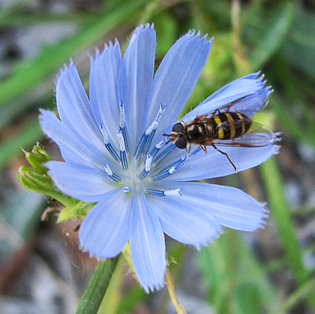
This Saturday Snippet is not from one of my collection of gardening books; it comes from The New York Times and an article called “Our Vanishing Flowers.” Those of us who love flowering plants should pay attention.

Ours is one of the most colorful relationships of history: We need flowers for our very survival, and in turn flowers — the plants that exist as crop cultivars or horticultural cut flowers or potted beauties — rely on us to reproduce and spread. But all is not well in this storied partnership: We who behold or nurture flowers are condemning their wild relatives to extinction at an alarming rate, and the world is quickly becoming a lesser place without them.

The author of this article, Stephen L. Buchmann, is a professor of entomology and evolutionary biology who has written a book called The Reason for Flowers. Sounds like one I will want to add to my collection.

Photo: Retha Meier, for The New York Times.
Saturday Snippet: Think Like a Plant

I love Barbara Damrosch’s book The Garden Primer. It may have been the very first gardening book I got as an adult, with my own small patch of earth to cultivate, trying to remember the lessons my parents had taught me when I helped out with their gardening tasks.  One of my favorite quotes: “Good gardening is very simple, really. You just have to learn to think like a plant.” Given that fall is the best planting season for most plants here in Zone 7, this week’s Saturday Snippet is about giving plants a good start:

If you are a Freudian you believe that birth traumas and subsequent experiences in people’s early lives can mark them for life. If you are a non-Freudian you consider this hogwash, holding that everyone is born with a certain personality, and beyond that your life is what you make of it.

I’m not entirely sure which theory is true where humans are concerned, but with plants I’m a Freudian all the way. Yes, a rhododendron is born a rhododendron and will always curl up its leaves self-protectively on cold winter days, only to become an extroverted mound of bright-flowered joy when it gets sufficiently warm in spring. But how large that mound is, and how glorious its display, depends on you, its parent, who can start it off by cramming its little roots into a stingy hole filled with meager soil, or give it a wonderful environment rich in love, care and compost.

The Garden Primer 2nd Ed

Photo: Berkshire Botanical Garden

Saturday Snippet: The Art of Japanese Gardens

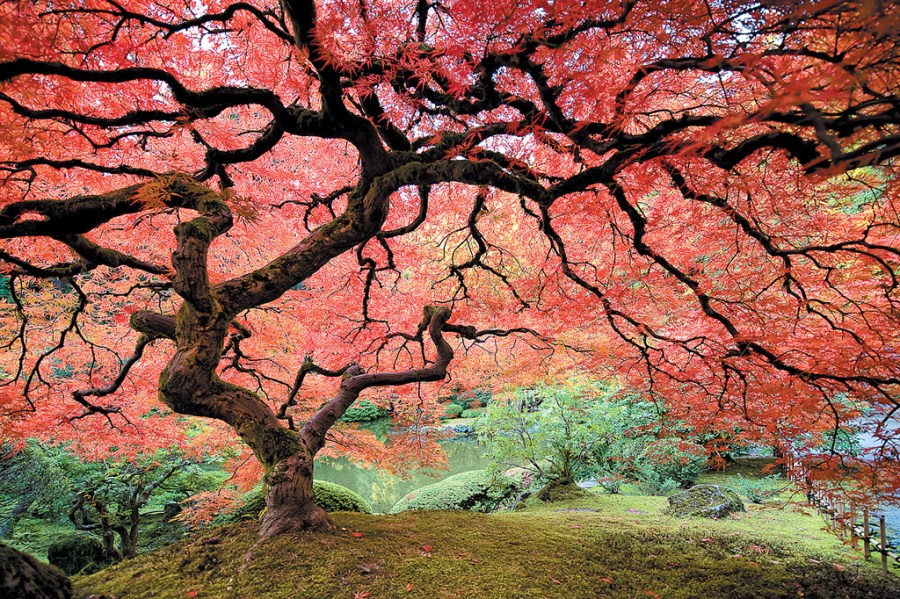
Though I do not myself have a Japanese garden, I love them and I have a newly planted grove of Japanese maples. In anticipation of their fall foliage soon, here is an excerpt from The Art of Japanese Gardens: Designing and Making Your Own Peaceful Space, by Herb Gustafson.

The traditional Japanese garden brings to the viewer a vast array of symbolic representations…. The Japanese “niwa” is special because of its double meaning as both “garden” and “place.” It is not merely an artistic arrangement of rocks, trees and water. The very shape of these elements cries out for recognition on a higher plane. We see the combinings of the primitive earthly elements: the air above and the water below. The earth is represented by the skeletal structure of stones protected by the integument of topsoil. Our origin in fire is seen as beacons to our future placed in the stone lanterns to guide us among the “rati”, or path. Our gardens can become a profound representation of the universe as a whole.

Photo: Pacific Horticulture, January 2012.

Saturday Snippet: In My Father’s Garden

After a weekend visit to my elderly mother, I have been thinking about how much she and my late father taught me about gardening. He loved to grow vegetables, but also lots of spring and summer bulbs. She preferred annual flowers and flower arranging, which she did as a volunteer at our church for many years. Like my father, I love spring bulbs and have been susceptible to growing “the $64 tomato”. Like my mother, I love bright flowers and the kinds of roses and perennials that make for beautiful arrangements.

A distinguished Atlanta-based journalist, the late Lee May, wrote a memoir several years ago called “In My Father’s Garden.” It is a memoir of his life, his career, his family and his gardens, starting with the childhood garden at his father’s home. My mother gave me a signed copy of the book when she heard him speak on a book tour; his note says: “Welcome to my garden! Enjoy!”

From his memoir:

Everyone’s garden is magical. Each has the power to energize you when you think you have no energy left, to calm jangled nerves and to offset a bad-karma day. And each garden has unique properties, some of which are known only to the person who lives with it, some of which are apparent to everyone. When someone shares a garden with you, invites you in, it becomes more yours each time you go there. With each visit, it becomes more familiar, like a house you know, or a person.

You can read more about Lee’s father and how their shared love of gardening brought reconciliation after decades apart here: Lee May’s Gardening Life. What unique properties does your own garden have, known only to you?

Lee May Father

Photo: Lee May.

Saturday Snippet: Fragrant Flowers

Recently I have been blogging about fragrance on my other blog, Serenity Now. My most recent “Fragrance Friday” was about ginger lilies, so for today’s snippet, I thought I would share a passage from a favorite small gardening book: Fragrant Flowers of the South, by Eve Miranda. In addition to the helpful information it contains for gardeners in Zones 7-11, it is illustrated not only with photographs but also some lovely watercolors of individual flowers.

The fragrance of the South is as much a part of its heritage as the stately antebellum homes and the mystic legends of the bayou. It’s the wild azaleas sweetening the swamps and hammocks; it’s the Cherokee rose entwining itself along an ancient, weather-worn, split-rail fence; it’s the cool evergreen majestic magnolias, dusting the air with heady perfume from their pristine white flowers. The special fragrances of Southern gardens are gifts that we Southerners share with the rest of the world, filling their memories of their visits to the South with the fragrant treasures we so often take for granted.

Of course when we decide to fill our homes and gardens with fragrant plants, we know that their perfume never totally belongs to the one who plants and tends them. For plants know no private bower, no property lines, but share their wealth from room to room, indoors; and outdoors, their odor jumps over hedges and walled fences, glides down sidewalks and slips into another’s window.

Photo: roadtrippers.com

Saturday Snippet: Bonsai Aesthetics

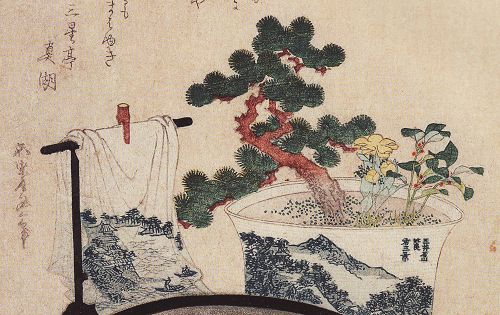
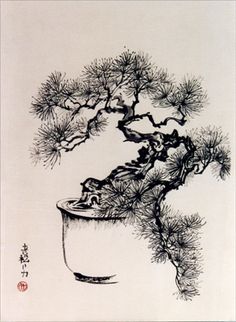
I have been trying to learn the art of bonsai for the last few years (off and on, as it is time-consuming when done well, and I have many other demands on my time). A favorite book is Bonsai Aesthetics: A Practical Guide, by Francois Jeker.

All of us can, in some modest way, create something beautiful. Therefore, the aesthetics of bonsai is something learned. The Japanese codified this art and formalized the rules. Let us try to absorb and understand them. These rules will quickly appear natural to us because they were born from observing nature. The day will come when, with rules forgotten, we will be able to explore new paths.”

I think that captures the advanced stage of most arts: once the artist has mastered the fundamentals, s/he is free to explore and express the individual vision with the depth and nuance of having all the tools. Here is one more favorite “snippet” from Jeker’s book, relating a conversation he had with legendary bonsai master John Naka:

One day I asked John Naka if he talked to his trees. He made a look as if he was angry: ‘Who do you take me for? Bonsai has nothing to do with superstition! Of course I don’t speak to them!

I am content with listening to them …’

I think I need to spend more time listening to trees.

Bonsai Print Sumi-e

Saturday Snippet: A Child’s Garden

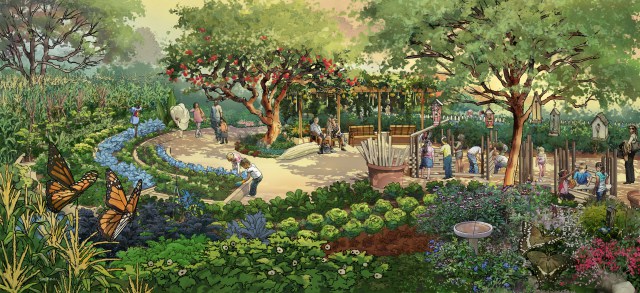
A child’s garden should be a place where children are allowed to run, play, climb, and freely experience natural materials and bodily sensations. Flowers and berries for picking can be planted in exuberant swaths, with paths made perhaps of yellow bricks winding through their beds. Climbing trees and hiding bushes should camouflage every corner. Miniature forests and meadows can be planted, miniature hills mounded, places for digging and constructing set aside. Rabbit hutches and doghouses should be designed with whimsical flair instead of utilitarian drudge. And water is essential — it is children’s (not to mention adults’) favorite outdoor feature.

From A Child’s Garden: Enchanting Outdoor Spaces for Children and Parents, by Molly Dannenmaier.

Saturday Snippet: Moss Gardening

Today’s Saturday Snippet, from Moss Gardening, by George Schenk:

The moss plant earns our respect, even our sense of awe, as one of the world’s lengthier successes in the business of living. Fossil traces confirm an age of moss that goes back about 400 million years, give or take an eon. Moss is older and more lowly than a fern, but higher and more august on life’s ladder than the lichen, that slow sharer of many places where moss lives. On sheer face value, the bun or mat of moss is an impressive creation despite lack of height. Images of the plant probably stand out as clearly in a person’s mind as those of a pine tree, a dandelion, or a head of lettuce. We pause to study moss, especially after a rain, and carry away a lasting impression of a plant velvety green and vibrant and yet soothing. Moss is a human experience well noted.

Photo: http://www.mossandstonegardens.com

Saturday Snippet: Hummingbird, Sage

This week’s Saturday Snippet:

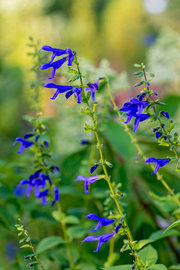
Sometimes when I am weeding in the late afternoon, I hear the vibrating wings of the ruby-throated hummingbird before I see it dipping its beak into the long tubular flowers of the blue anise sage (Salvia guaranitica) called Black and Blue for its cobalt-blue petals and near-black calyxes at the base of the flowers. Hummingbirds are shy, but if I remain perfectly still, it is usually so intent on the nectar inside those deep blue trumpets that I can admire it out of the corner of my eye as it backs out of one flower and moves on to another. Then, in a flash of iridescent green and red, it is gone.

Anne Raver, In The Garden, The New York Times, August 20, 2014.

Photo: Rob Cardillo, The New York Times

Saturday Snippets

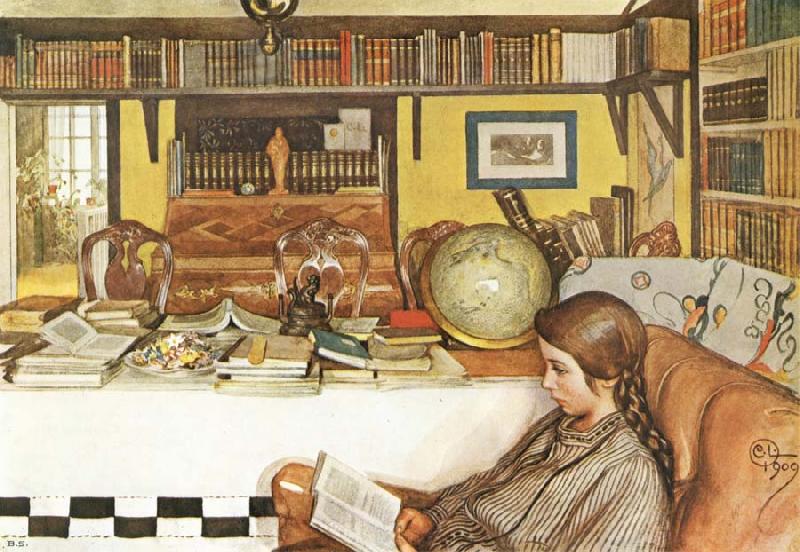
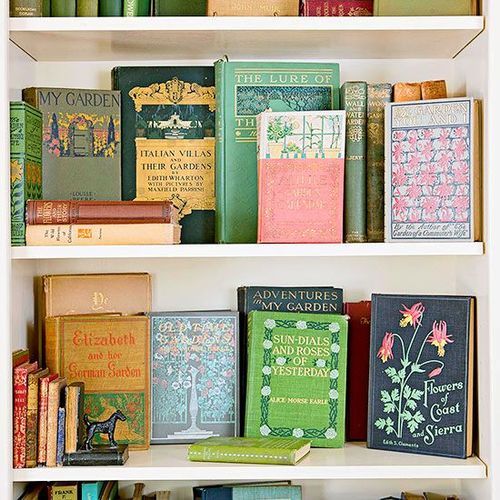
I’m going to add a posting feature to this blog and call it “Saturday Snippets.” As I began with the idea of rediscovering gardening and my many garden-related books, and named the blog after one of my favorites, “Old Herbaceous” by Reginald Arkell, I thought it would be fun to share weekly snippets of garden literature from my collection.

Here’s my first snippet:

“Gardening was a whole-time job, like the cows or the sheep. Cows had to be milked, whatever happened; and who thought of stopping in bed when the sheep were lambing? In a garden, you had to work with the seasons. There were slack times, when you could take an easy with a pipe behind the tool shed, but when the grass started growing and the weeds were getting on top of you, there was an end to all that nonsense….Hours he’d spent watering….But these young fellows….”

Old Herbaceous, Reginald Arkell.

Photo: mustanggina.tumblr.com