I haven’t posted here in too long — I spent the month of May posting daily on my other blog, “Serenity Now”, in a “Roses de Mai Marathon” of rose-centered fragrances. It was great fun, and it took my mind off the ongoing pandemic, social isolation, etc. I am privileged to be able to work from home, so my employment has not been interrupted; and my family are all safe and well, which is such a blessing.
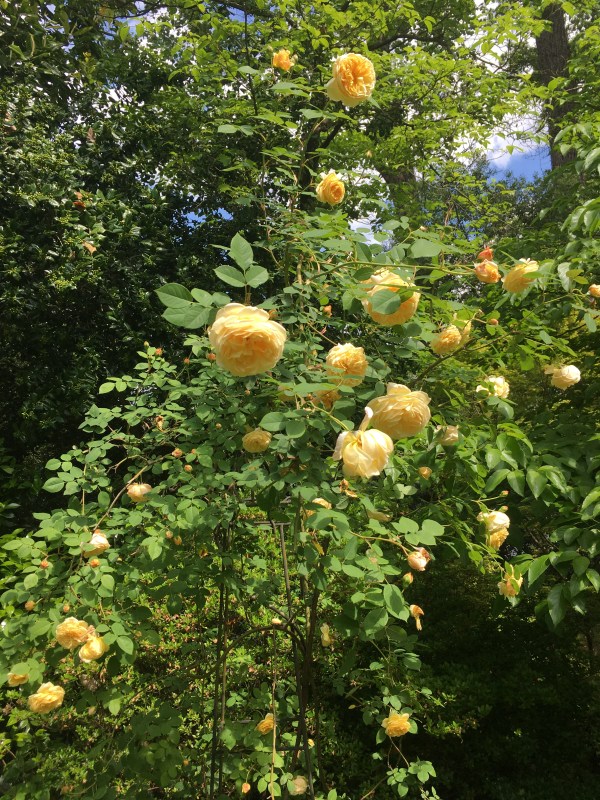
The events of the last ten days here in America have been astounding, and it is taking me a while to process them. Meanwhile, we have had a beautiful spring; my own roses have been spectacular (and are now starting a second flush of bloom), and I’ve planted what I call my “virus victory vegetable garden”, which is flourishing. We’ve already harvested our first purple cauliflower, which got much bigger than the photo below, and it was delicious!
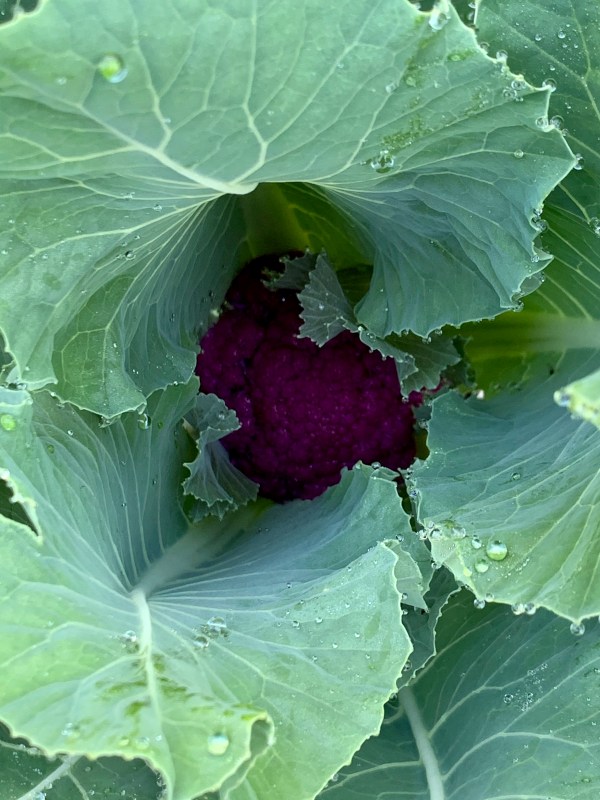
The peace and beauty of my city garden, and the weather, contrast so much with the conflict just outside my neighborhood. It is quite jarring, and my husband and I comment on that dissonance often on our regular walks. I’ve been thinking a lot about Voltaire’s famous ending phrase from his novel Candide, “Il faut cultiver notre jardin.” What does it mean?
Literally, in English, it means “We must cultivate our garden.” Sometimes that is taken to mean that it is useless to try to understand or counter the wider world’s troubles, and that all one can do is retreat to one’s own garden.
Tempting as that is, for an introverted gardener like myself, I don’t think that’s it. Or maybe, I prefer to think that’s not it. Adam Gopnik wrote in “The New Yorker” magazine, some years ago, in response to a translator who translated it as “We need to work our fields” (which implies something very different):
By “garden” Voltaire meant a garden, not a field—not the land and task to which we are chained by nature but the better place we build by love. The force of that last great injunction, “We must cultivate our garden,” is that our responsibility is local, and concentrated on immediate action.
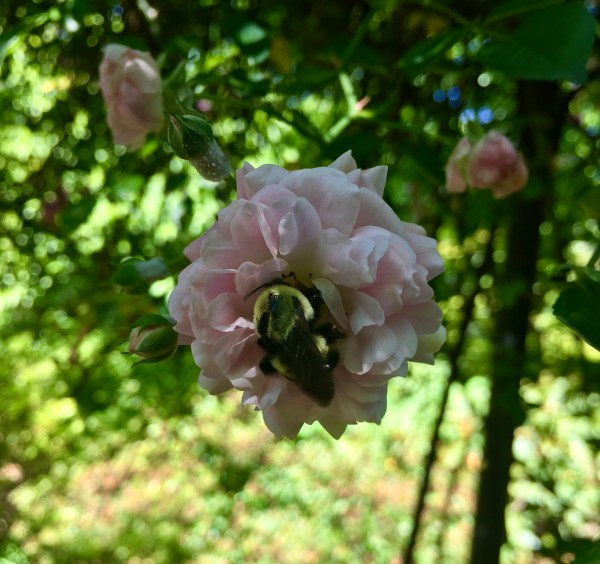
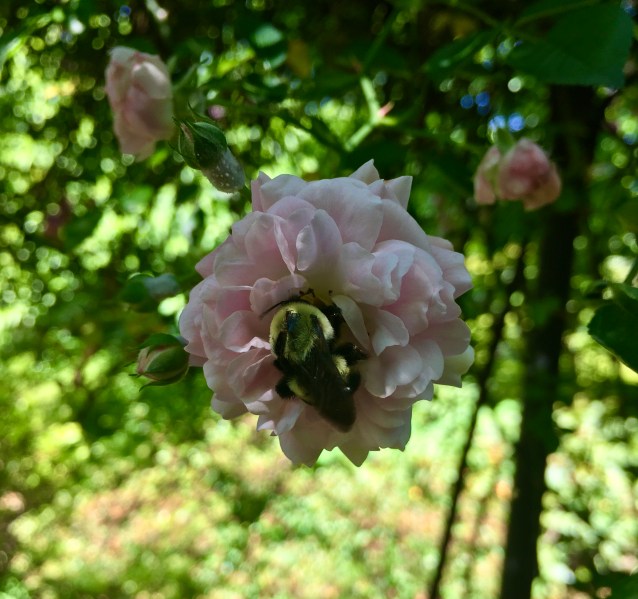
Whether or not that is what Voltaire intended over 250 years ago, that resonates with me. So I will cultivate both roses and vegetables in my actual garden, and I will do my best to fulfill my immediate and local responsibilities to advance justice and peace, and build a better place by love. Right here, right now, where I live. After all, bees love flowers, but they are also symbols of peaceful, industrious activity, and community.
If you’ve read this far, I hope you and your family, and your garden, are staying safe and well.
 Old Herbaceous