Saturday Snippet: Hummingbird, Sage

This week’s Saturday Snippet:

Sometimes when I am weeding in the late afternoon, I hear the vibrating wings of the ruby-throated hummingbird before I see it dipping its beak into the long tubular flowers of the blue anise sage (Salvia guaranitica) called Black and Blue for its cobalt-blue petals and near-black calyxes at the base of the flowers. Hummingbirds are shy, but if I remain perfectly still, it is usually so intent on the nectar inside those deep blue trumpets that I can admire it out of the corner of my eye as it backs out of one flower and moves on to another. Then, in a flash of iridescent green and red, it is gone.

Anne Raver, In The Garden, The New York Times, August 20, 2014.
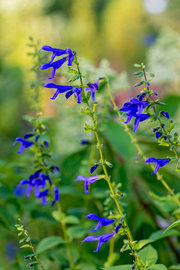
Photo: Rob Cardillo, The New York Times

New Hampshire Wildflowers

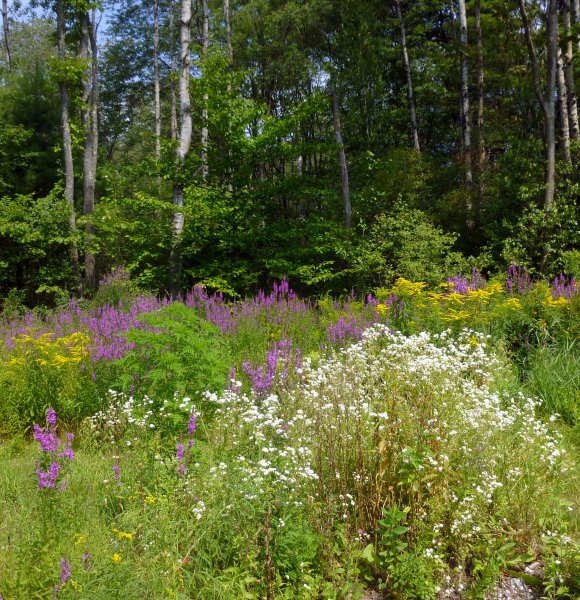
Visiting New Hampshire in August, I am struck again by the beauty of the roadside wildflowers and other plants. Queen Anne’s Lace is a favorite, in bloom at the same time as goldenrod. Invasive pest that it is, the purple loosestrife is also pretty this time of year. Lots of green ferns at the woods’ edges, and wonderful carpets of green moss and silvery grey-green lichens, leading toward the occasional pops of white birches against the dark green of surrounding trees. And in flowerbeds, the hostas are in peak form, leafed out but not yet bedraggled, flower spikes just starting to bloom and without any faded blossoms. Hybrid and wild daylilies are blooming, as are the magenta flowers of echinacea. Summer in New England. Ahhhh.

Photo: nhgardensolutions.wordpress.com

Gibbs Gardens and White Flowers

On my bucket list to visit: Gibbs Gardens in northeast Georgia. Gibbs Gardens was built by Jim Gibbs, the now-retired founder and head of a major Atlanta landscaping company. Now open to the public, the Gardens cover 220 acres of his 292-acre property in Cherokee county. By the numbers:  3 feature gardens, 16 separate gardens, 19 waterfalls, 24 ponds, 32 bridges. Among many notable features are a Japanese Garden and the annual spring display of daffodils, said to be one of the most spectacular outside Holland.

Until I get there in person, I can follow what’s happening and get some gardening advice from the Gibbs Gardens blog, co-written by Jim Gibbs and Erica Glasener, who hosts the HGTV show “A Gardener’s Diary” and has written several gardening books as well as articles about Southern gardening and gardening in Georgia. Here is her latest post, about white flowers in the summer garden: Summer Whites.

As I have a love affair with Japanese maples, I think I’ll time my visit to see their color in the fall at the Japanese Garden. Can’t wait!

Outstanding American Gardens: A Celebration

The Garden Conservancy has announced the coming publication of its 25th anniversary book: Outstanding American Gardens: A Celebration — 25 Years of the Garden Conservancy. Outstanding American Gardens.

The Garden Conservancy was founded in 1989. Its mission is to “save and share outstanding American gardens for the education and inspiration of the public.” It sponsors Open Days, offers consulting services to gardens, and works to preserve significant endangered gardens. What a wonderful organization! Can’t wait to buy the book, which features 50 American gardens of all kinds, from across the country: coast-to-coast and in-between.

Saturday Snippets

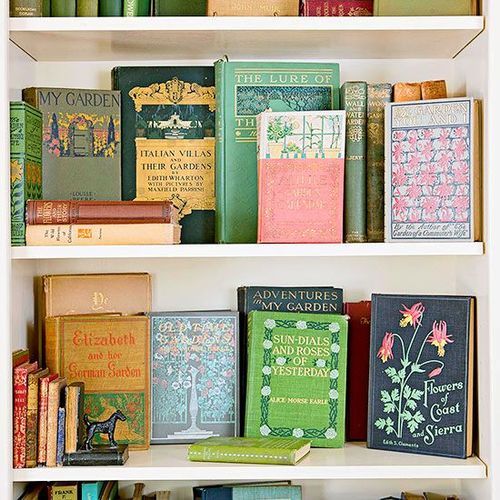
I’m going to add a posting feature to this blog and call it “Saturday Snippets.” As I began with the idea of rediscovering gardening and my many garden-related books, and named the blog after one of my favorites, “Old Herbaceous” by Reginald Arkell, I thought it would be fun to share weekly snippets of garden literature from my collection.

Here’s my first snippet:

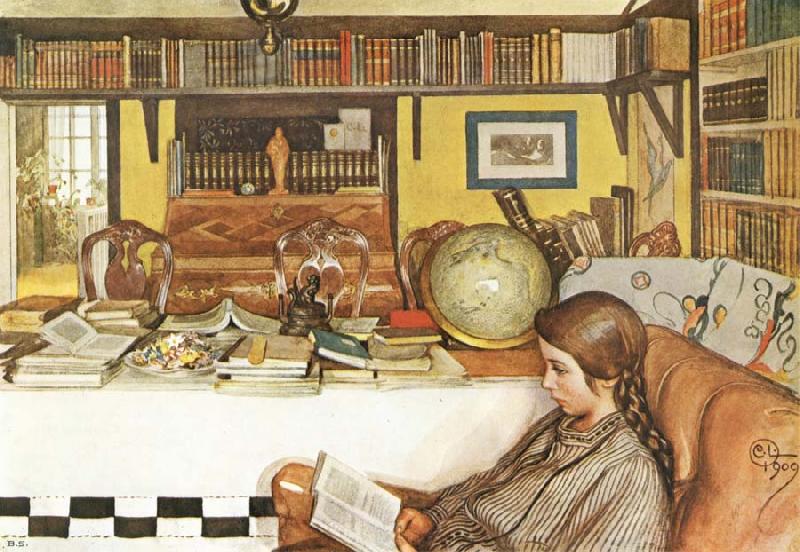
“Gardening was a whole-time job, like the cows or the sheep. Cows had to be milked, whatever happened; and who thought of stopping in bed when the sheep were lambing? In a garden, you had to work with the seasons. There were slack times, when you could take an easy with a pipe behind the tool shed, but when the grass started growing and the weeds were getting on top of you, there was an end to all that nonsense….Hours he’d spent watering….But these young fellows….”

Old Herbaceous, Reginald Arkell.

Photo: mustanggina.tumblr.com

Earth Goddess

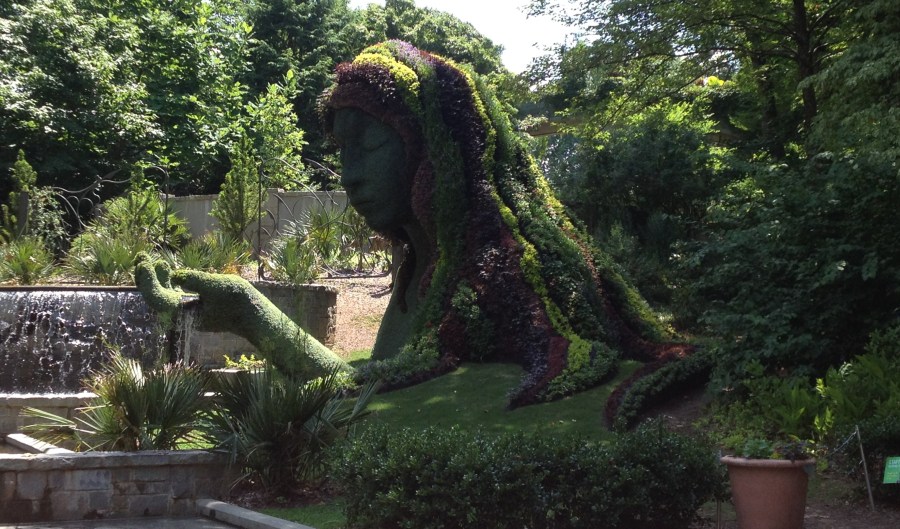
Going back into some older garden photos, I came across this favorite: the “Earth Goddess” mosaiculture installation at the Atlanta Botanical Garden.  It was part of the Imaginary Worlds exhibit last year; and ABG was able to keep it. What is mosaiculture? “Each sculpture is a living work of art. Thousands of annuals are planted in colorful, ornate patterns on steel forms covered with netting and soil. A combination of internal irrigation systems and hand watering help the plants to flourish. Each sculpture is meticulously groomed on a weekly schedule to maintain the artistic lines as the plants grow.”

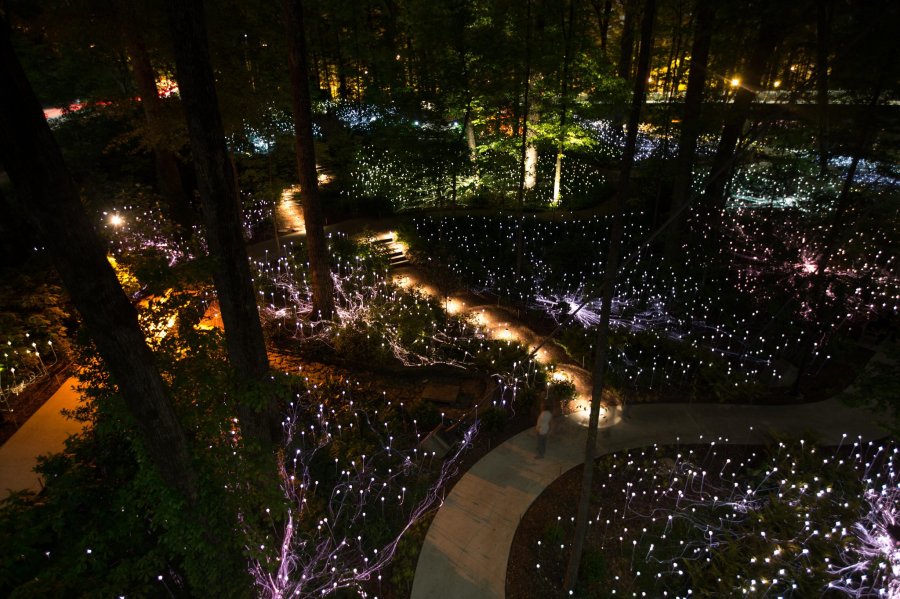
“Earth Goddess” is 25 feet tall and covered with 40,000 annuals. She is integrated into ABG’s Cascades Garden, with some of the water flowing over her outstretched hand. In the winter, during the annual “Garden Lights, Holiday Nights”, she is covered with thousands of shimmering lights. Magic!

The Sunset Garden by Tamara Bridge | Susan Rushton

Susan Rushton has posted the most beautiful image of Echinacea here:

via The Sunset Garden by Tamara Bridge | Susan Rushton.

I love these new colors among Echinacea, although I usually gravitate to cooler shades in the flower garden. You can see how those cooler pastel shades in the background make these warm tones pop. I can see that, but I can’t replicate the effect, either in my garden or my photos. But I so appreciate those who can!