Saturday Snippet: Winter Gardens and Conservatories

In honor of this January weekend’s blizzards and storms, and feet of snow in much of the Northeastern United States, as well as the new season of Downton Abbey airing this month, this week’s Saturday Snippet is from “The Head Gardeners; Forgotten Heroes of Agriculture”, by Toby Musgrave.

Ornate conservatories or winter gardens were an adjunct of any garden that claimed to be of note. They were sometimes attached to the house or detached and set in the pleasure grounds. These great glass structures were home to many exotic and tender new arrivals brought from jungles and tropical regions across the world. Indeed, be they tendder, half-hardy or hardy, the wealth of new plants brought to Britain by the plant hunters excited botanists and garden-owners, and provided head gardeners with a constant onslaught of challenges. These expensive treasures required careful and skilled nurturing to survive. Often in the vanguard of those attempting to cultivate such tricksy rarities, the head gardener had to rely on his experience, a modicum of experimentation and an ability to learn fast.

Photo: RBG Kew.

Saturday Snippet: Bulb

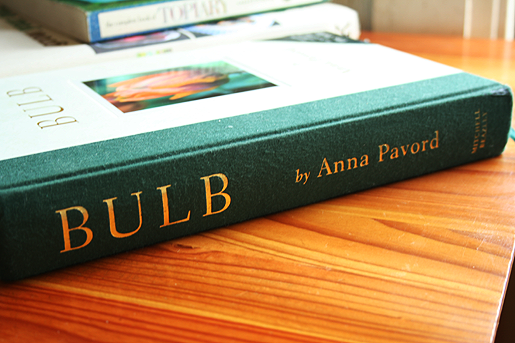
This week, I am quoting an author whose book I do not yet own: Anna Pavord, author of “Tulip” and “Bulb.” I need to own the latter. In middle age, I have realized that I have a few consistent passions toward specific kinds of plants. One of them is the family of bulbs and corms. I think what I love is the gift-like nature of bulbs: they are like little papery packages, hiding wonderful flowers within. I love the surprise aspect of not knowing exactly when their shoots will suddenly appear; and many of my favorite flowers come from bulbs: narcissus, crocus, amaryllis, lilies, etc. Bulbs work on their own timetables.

“At the heart of the whole business is the feeling that when we garden we abandon a timetable constructed around dentists’ appointments, car services and the possible arrival of trains, to plunge headlong into a completely different timetable, an immense and inexorable one entirely outside our control, ruled by the sun, the moon, the seasons.”

Photo: www.chicagonow.com

Saturday Snippet: Spring in Winter

It has been so unseasonably warm here that temperatures have regularly reached 70 degrees Fahrenheit all December. As the New York Times points out, gardens and gardeners are confused: December Heat Tricks Flowers Into Putting On Spring Display. Today’s Saturday Snippet is from Rosemary Verey’s classic, The Garden in Winter.

To teach yourself to ‘see’ your own garden in winter, look first at the trees and shrubs planted for their spring or summer flowers, their handsome leaves, their autumn colours. In their winter guise they will have a different allure. Each has its own winter character, with buds of varying shape, size and texture… The one thing they all have in common is that they are waiting for spring’s warmer days.

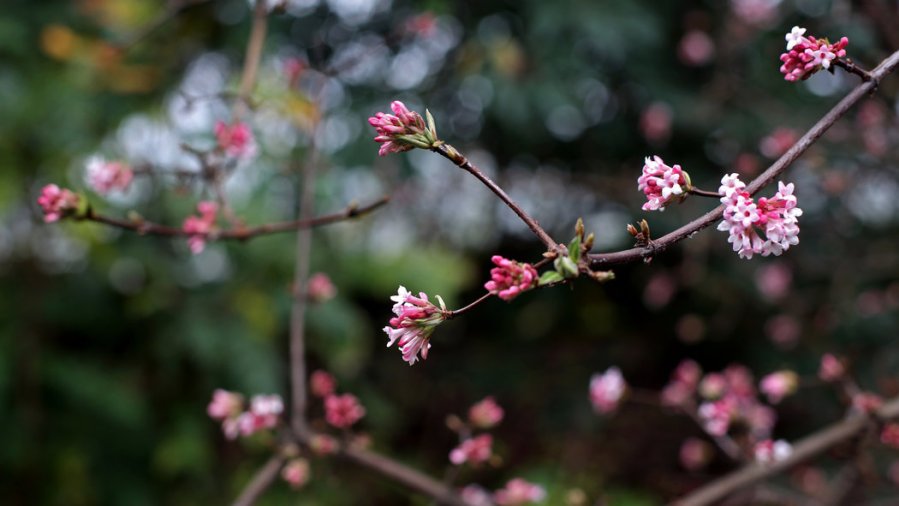
This year, those warmer days arrived in December. Blooming in my garden right now are: mahonia, camellias, roses   (David Austin’s lovely yellow Teasing Georgia), hellebores, chrysanthemum, winter daphne and Japanese apricot. Dozens of confused narcissus have sent up green shoots. My containers are still blooming with pansies, snapdragons, begonias and oxalis triangularis. The brilliant red twigs of the coral bark Japanese maple, whose lower branches I twined with Christmas fairy lights, shine in today’s sunlight against the dark evergreen leaves of the southern magnolias. It is as if summer and fall never really ended, except for the autumn leaves, but winter and early spring have joined them.

Photo: The New York Times.

Saturday Snippet: Starflowers

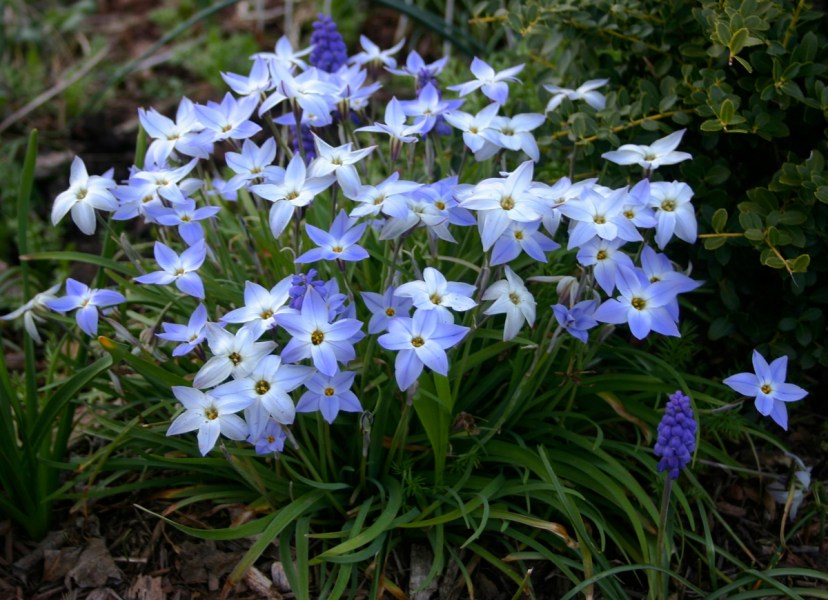
The slender green shoots of Ipheion uniflorum have popped out between the flagstones at the back of our old garden, visible now that most of the leaves have fallen from trees and shrubs. Unlike most spring bulbs, the starflower sends up its leaves in the fall, where they add an unexpected spot of soft green to the autumn tones of red, orange, yellow and brown. In early spring, they will be covered in small, star-shaped blossoms of light blue that give off a soft, pretty fragrance when left alone. If the leaves are bruised, they smell like garlic. Scott Ogden has this to say, in his wonderfully useful book Garden Bulbs for the South:

After the new year, any brief spell of sunny weather will coax these leafy clumps into bloom. The flowers are a cheerful pale blue and resemble six-pointed stars. Once they begin to appear, the blossoms continue steadily into March.

These lovely blue flowers present a perennial mystery for gardeners who discover them in the grass. They seem to have created consternation for botanists as well. The usual questions are “What are they?” and “Where did they come from?

I’m not fussed about what they are or where they came from. In my garden, what they are is lovely and welcome. Where they came from is random, as they spread so quickly and readily by offsets, seeds and runners. I’m always happy to see their harbingers, the tender green shoots of their leaves!

Photo: Wendy Kremer, finegardening.com.

Saturday Snippet: The Winter Aconite Fairy

I am half English and when I was a child, my English relatives often sent me and my siblings classic English storybooks as gifts. So I grew up on Arthur Rackham, C.S. Lewis, Elizabeth Goudge, Beatrix Potter, Enid Blyton. J.M. Barrie — and Cicely Mary Barker, author and illustrator of the Flower Fairies series of little books. They helped inspire and sustain my love of flowers and gardening, as I could imagine the fairies while my parents taught me how to plant perennials, weed flowerbeds and pot up bulbs.

Today, I will be planting winter aconite tubers, as well as various narcissus, and ajuga reptans to fill in among the flagstones of a new, small patio and pathway. Today’s Saturday Snippet:

The Winter Aconite Fairy

Deep in the Earth
I woke, I stirred.
I said: “Was that Spring I heard?
For something called!”
“No, no,” they said:
“Go back to sleep. Go back to bed.”
“You’re far too soon;
The world’s too cold
For you, so small.” So I was told.
But how could I
Go back to sleep?
I could not wait; I had to peep!

Up, up, I climbed,
And here am I.
How wide the earth! How great the sky!
O wintry world,
See me, awake!
Spring calls, and comes; ’tis no mistake.

Cicely Mary Barker
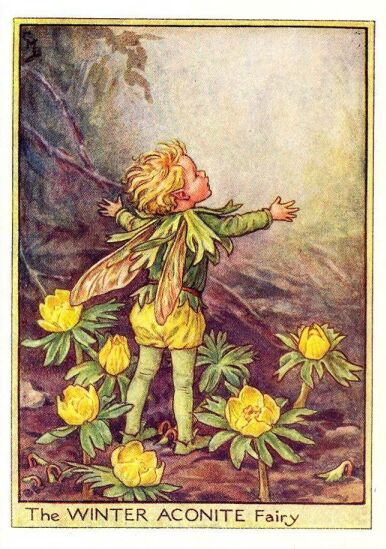
winter_aconite_flower_fairy

Illustration: Cicely Mary Barker (copyright The Estate of Cicely Mary Barker).
Saturday Snippet: Fragrance in Bloom

A wonderful book by veteran gardener and garden writer Ann Lovejoy, whose books on perennials and mixed borders are among my very favorites, Fragrance in Bloom sums up this season very well:

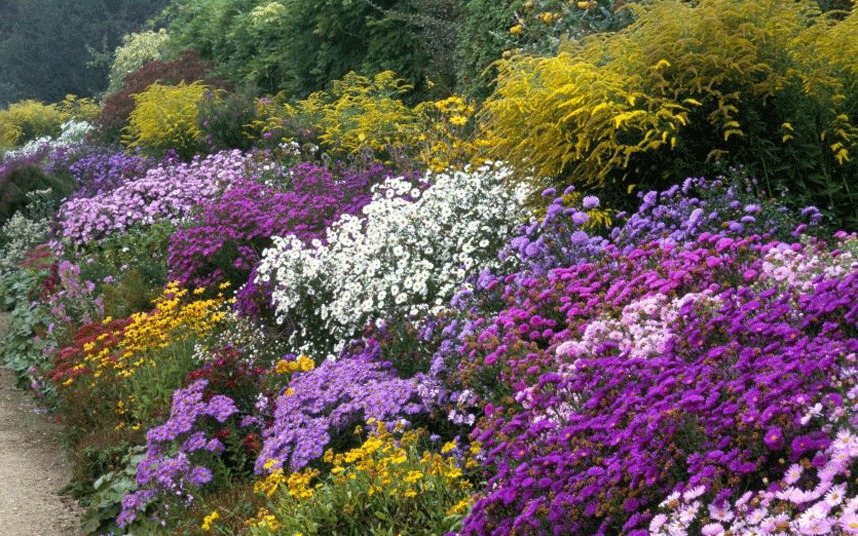
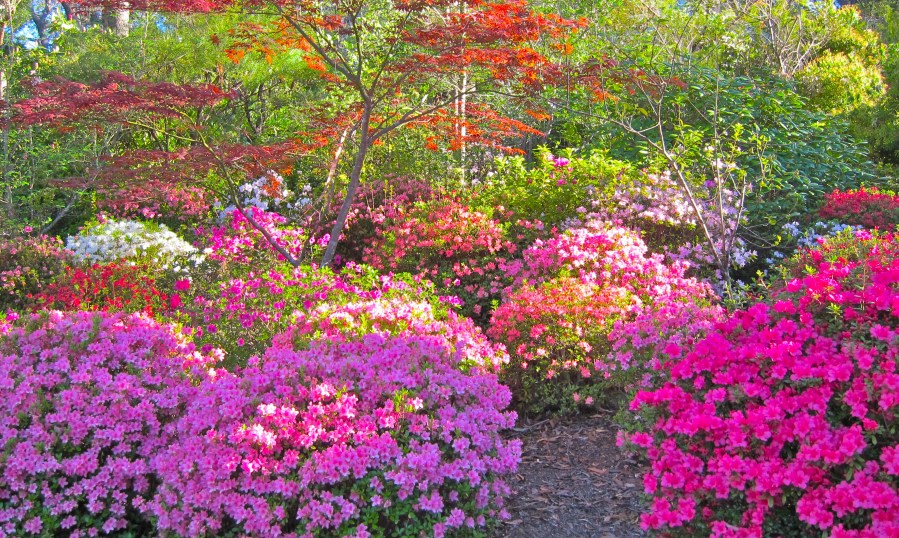
For gardeners, fall is less an ending than the beginning of another great cycle of work and rest and fulfillment. In fall, we plant the bulbs that will illuminate the spring yet unborn. In fall, we dig and divide and recombine our plants into fresh combinations to enjoy next summer. In fall, we commit new plants to the ground, giving trees, shrubs and perennials a chance to make strong root growth before winter. In fall, we can relax and let our plants ripen into maturity before they sleep. Autumn is also glorious in its own right. As the night air cools, leaves catch fire, the tired greens igniting to lava reds, ember oranges, and smoldering copper. As the slanting daylight lengthens, it gilds the garden with a soft haze. Numinous and transcendent, the autumn light turns mess into magic. When we can appreciate that the slumping, seed-spangled demise of summer’s magnificence is truly magnificent in itself, it becomes easier to stop being so concerned about grooming away every browning leaf. Instead, we can relax and simply revel in autumn’s richness.

Photo: http://www.telegraph.co.uk.

Blogging 201: Custom Header

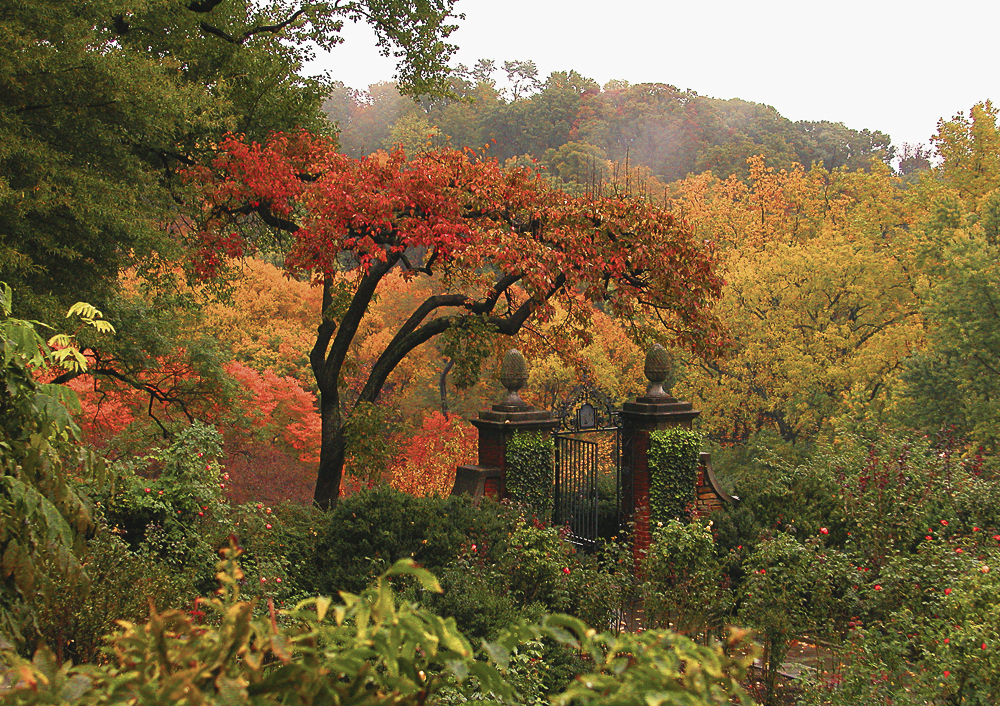
I’ve changed my header image to reflect the current season, which seems appropriate for a blog focused on gardening and plants! What do you think? This lovely photo is an autumn view from the rose garden at Dumbarton Oaks.

View from the Rose Garden in Autumn

Saturday Snippet: Think Like a Plant

I love Barbara Damrosch’s book The Garden Primer. It may have been the very first gardening book I got as an adult, with my own small patch of earth to cultivate, trying to remember the lessons my parents had taught me when I helped out with their gardening tasks.  One of my favorite quotes: “Good gardening is very simple, really. You just have to learn to think like a plant.” Given that fall is the best planting season for most plants here in Zone 7, this week’s Saturday Snippet is about giving plants a good start:

If you are a Freudian you believe that birth traumas and subsequent experiences in people’s early lives can mark them for life. If you are a non-Freudian you consider this hogwash, holding that everyone is born with a certain personality, and beyond that your life is what you make of it.

I’m not entirely sure which theory is true where humans are concerned, but with plants I’m a Freudian all the way. Yes, a rhododendron is born a rhododendron and will always curl up its leaves self-protectively on cold winter days, only to become an extroverted mound of bright-flowered joy when it gets sufficiently warm in spring. But how large that mound is, and how glorious its display, depends on you, its parent, who can start it off by cramming its little roots into a stingy hole filled with meager soil, or give it a wonderful environment rich in love, care and compost.

The Garden Primer 2nd Ed

Photo: Berkshire Botanical Garden

Saturday Snippet: The Art of Japanese Gardens

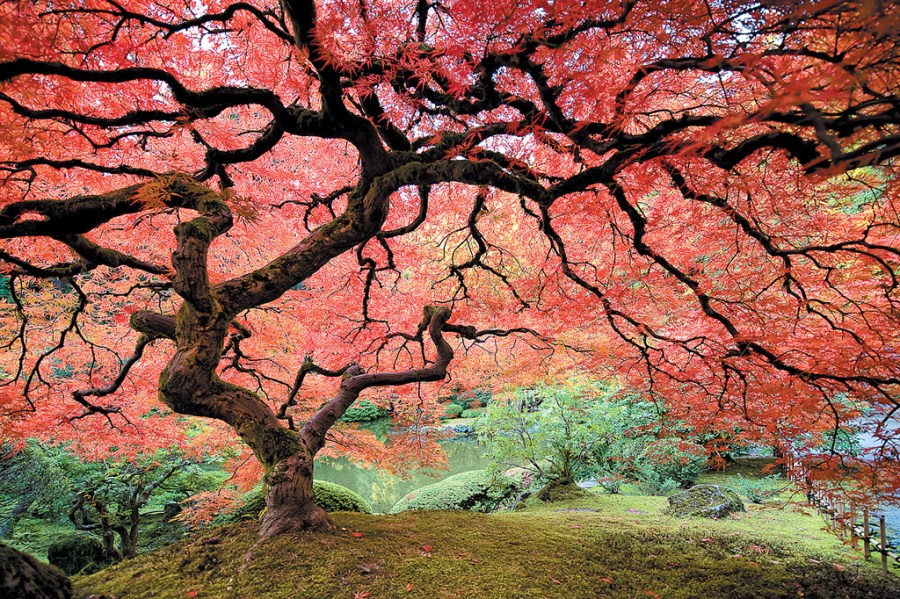
Though I do not myself have a Japanese garden, I love them and I have a newly planted grove of Japanese maples. In anticipation of their fall foliage soon, here is an excerpt from The Art of Japanese Gardens: Designing and Making Your Own Peaceful Space, by Herb Gustafson.

The traditional Japanese garden brings to the viewer a vast array of symbolic representations…. The Japanese “niwa” is special because of its double meaning as both “garden” and “place.” It is not merely an artistic arrangement of rocks, trees and water. The very shape of these elements cries out for recognition on a higher plane. We see the combinings of the primitive earthly elements: the air above and the water below. The earth is represented by the skeletal structure of stones protected by the integument of topsoil. Our origin in fire is seen as beacons to our future placed in the stone lanterns to guide us among the “rati”, or path. Our gardens can become a profound representation of the universe as a whole.

Photo: Pacific Horticulture, January 2012.