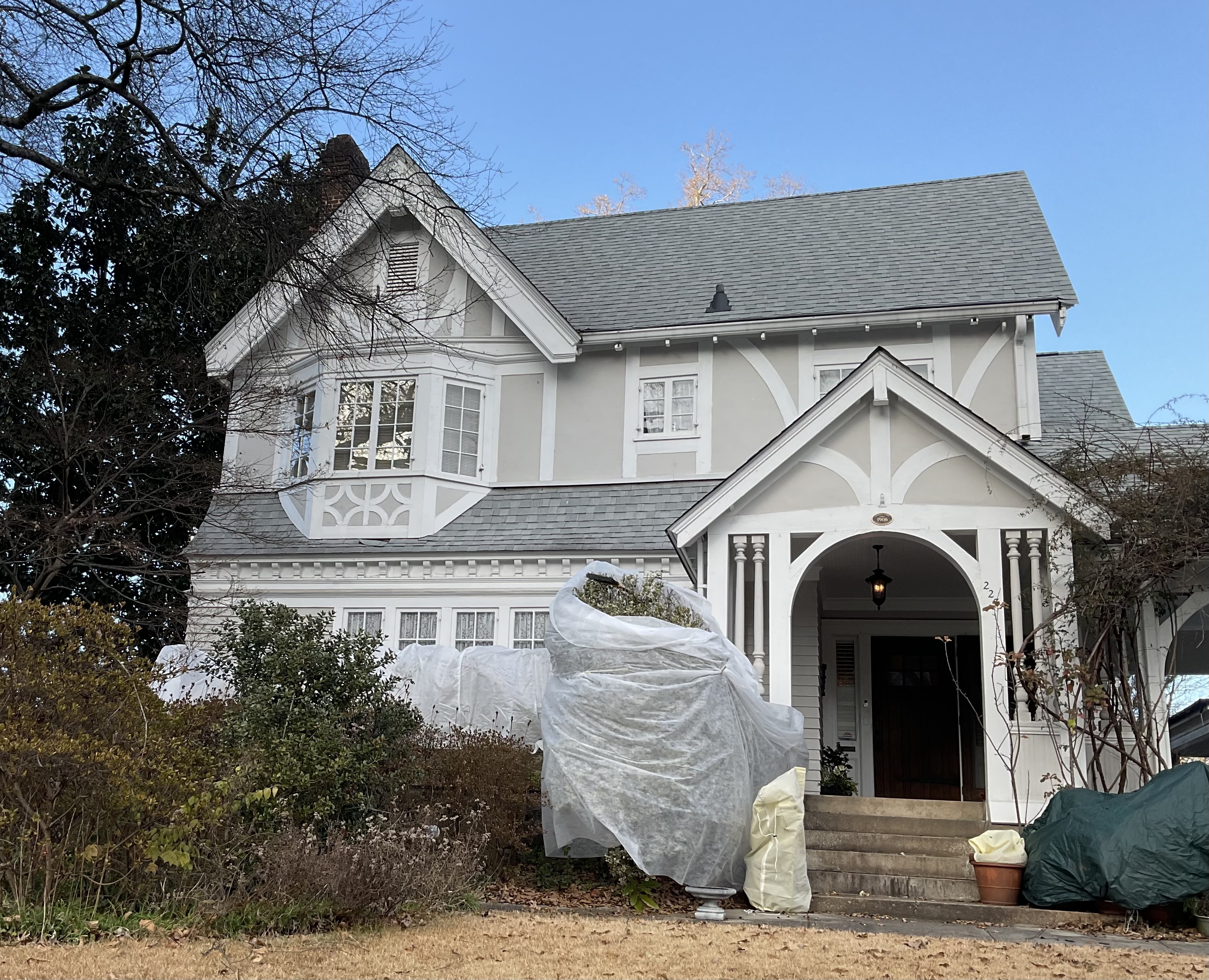
Our newly Zone 8a (we used to be 7b) garden is shivering with unusually cold weather: temperatures in the low teens at night, sometimes not rising above freezing even on sunny days. Because I have a number of newly planted shrubs and some cherished David Austin roses in big pots, and because we suffered plant loss and damage in last winter’s hard freeze, I decided to take more active measures to protect my plants, even though I had already sprayed many of them with Wilt Stop (which I hadn’t done last year).
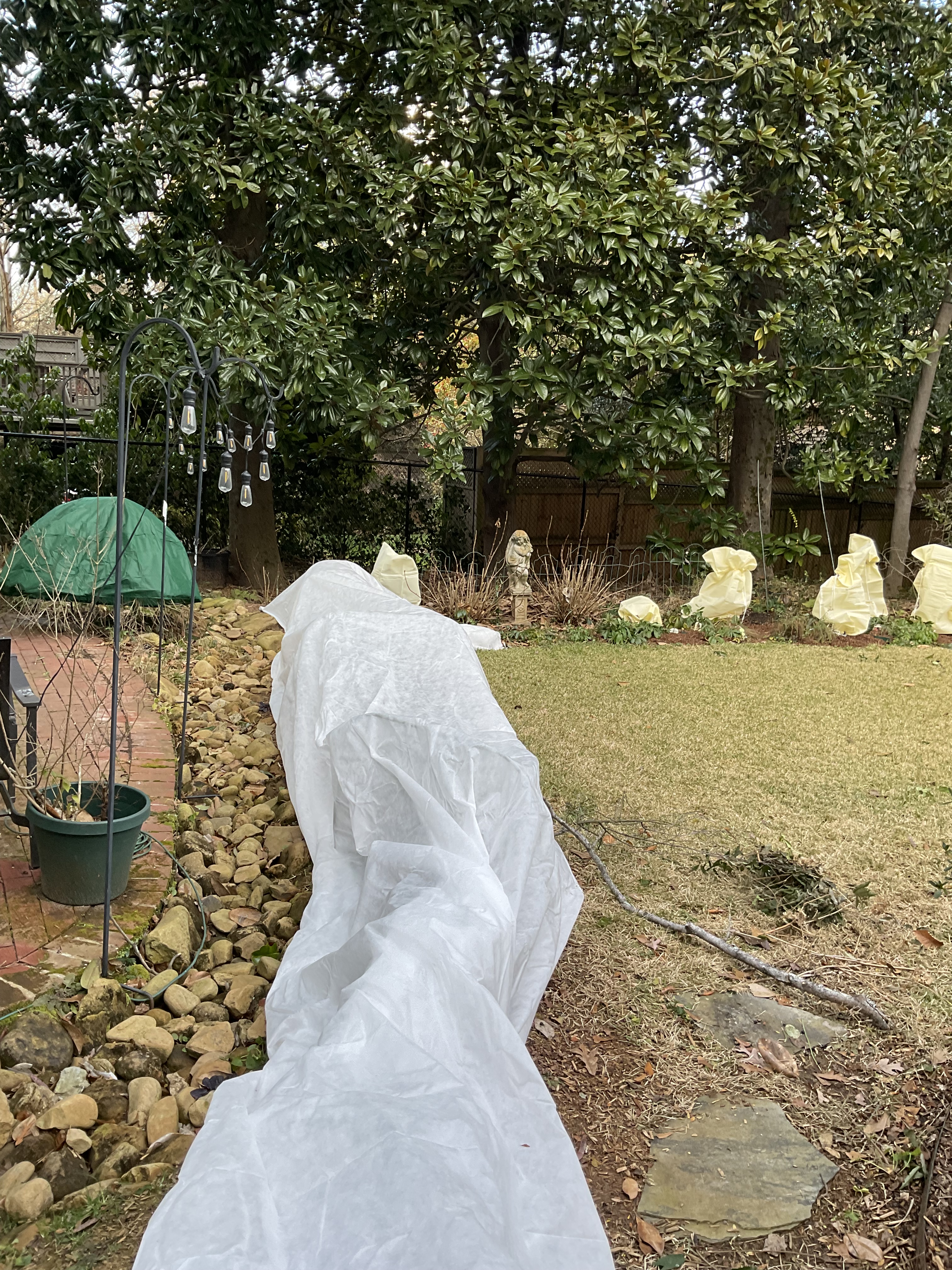
First, I added a few more inches of mulch to flowerbeds and mixed borders. Then I wrapped large pots with 1/2 inch thick bubble wrap. Next, I covered one row of big pots with newly ordered, heavier frost cloth, secured with clothes pins. Then I placed another length of the same heavier frost cloth over the berm where I lost several lavender plants last year, supported by plant hoops. I put the lighter frost cloth I already had around the tea olive that was hard hit last year but has been growing back nicely, and the Debutante camellia that lives in a pot next to it.
I ordered several frost cloth bags with drawstrings, and those went over the roses I had planted this fall, some in the ground and some in pots. A couple of extra bags went over the still small native azaleas I planted two years ago. A large green frost “planket” was tied down over a cluster of pots with herbs like lavender and sage, and another over a prized Japanese maple. When I shared photos of my work with friends, one of them commented that it looked like a Christo garden, referring to the artist who was famous for his outdoor art installations that involved wrapping of landscape elements.
I hope you and your gardens are well-insulated against the cold!
Hello again! It has been too long since I posted here, so this will be longer than usual; my other blog, “Serenity Now: Scents and Sensibilities” has been taking up a lot of time as I’m doing two monthly blogging projects with a blogger friend. And in between, I’ve actually been doing the gardening! I will retire at the end of this month and have been using up vacation days that won’t get paid out, so the garden has gotten much more focused attention lately. I think I’ve finally tamed the vegetable garden; I planted a lot less this spring and have been more regular in pinching off tomato shoots and redirecting wayward morning glory tendrils. My eggplants and herbs have been a major success!
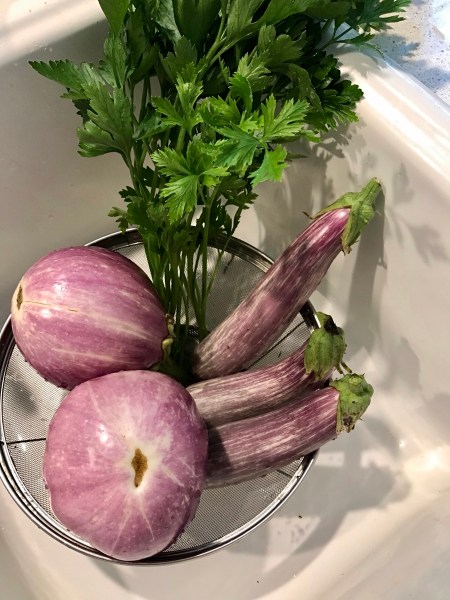
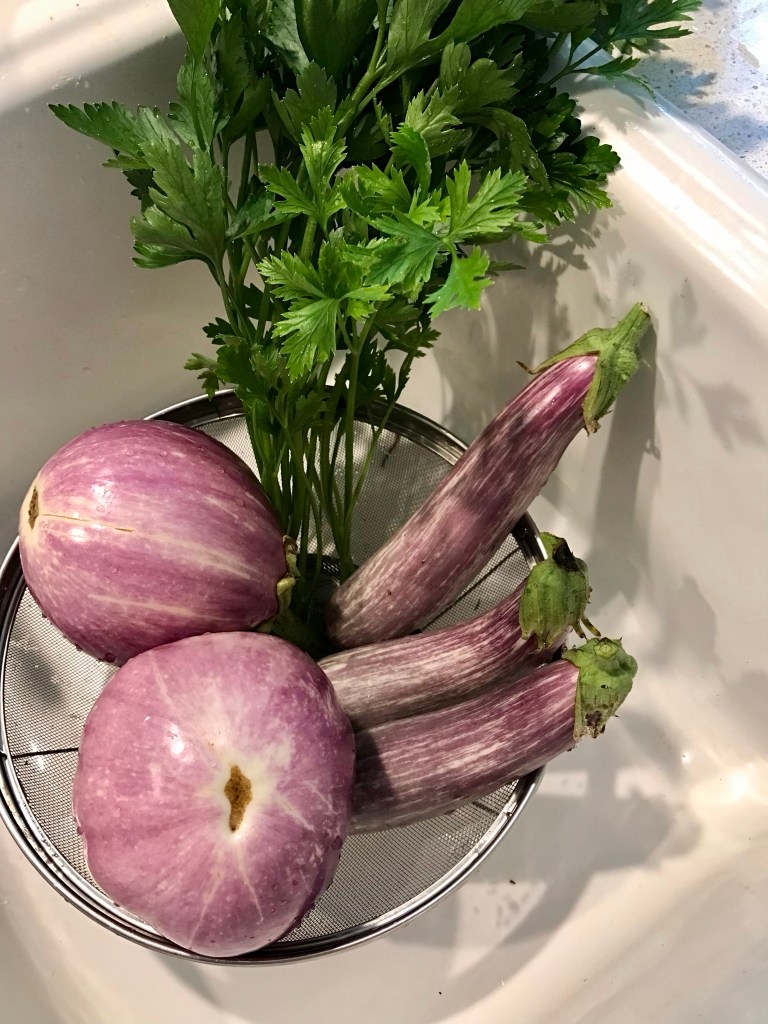
Eggplants Rosa Bianca and Listada de Gandia for the grill; parsley for chimichurri sauce
I’m especially proud of how well my David Austin roses have been doing in their large pots on our sunny front terrace. My working from home two days a week since 2021 has really served them well — I’ve been more diligent about everything from watering to feeding to spraying, and I’ve been rewarded with multiple flushes of bloom, especially from Lady of Shalott and Winchester Cathedral. Gotta admit, my attraction to the latter is based more on the pop song of that name than the actual cathedral, which I’ve never seen. I remember the song from my childhood, when my English mother played pop radio while raising three children, while her younger sister cavorted through Swinging Sixties London as a model and actress. Yes, she sent us Beatles albums before they were released in the US, which made me a lifelong fan. The first song I remember singing by myself was “She Loves You (Yeah, Yeah, Yeah)“.
Winchester Cathedral, by The New Vaudeville Band; film from The Ed Sullivan Show.
My poor neglected Teasing Georgia has not bloomed well this year, and she’s usually a trouper even in our hot, humid climate, so I’m trying to do better by her with more regular feeds, including with micronutrients. I need to climb up a ladder to prune out dead wood, and I think I must get my husband to prune away another branch from a nearby dogwood that now shades part of the rose arbor.
Speaking of doing better by my roses, I’ve been looking into planting one or more into bottomless planters. I have a beautiful Generous Gardener rose in a large pot that I placed in a border. Lo and behold, GG has sent its roots right down through the drainage hole, which means the poor rose now gets waterlogged on a regular basis with all the rain we’ve had this year. That will finish it, so I need a better arrangement, but I did that in the first place because the soil where I wanted to plant her wasn’t great, and it was full of competing shallow roots from azaleas.
Here’s a great video about bottomless planters by Bunny Guinness, a noted horticulturist and landscape architect, garden columnist, BBC radio panelist, and multiple gold medal winner at the RHS Chelsea Flower Show. She also happens to be the niece of the late David Austin, hybridizer of the marvelous English Roses, who named a rose after her.
Bunny Guinness on bottomless planters
Okay, I am seriously not prepared or qualified to saw out the bottom of terracotta pots! BUT I think I’ve found a solution. I was considering using grow bags and cutting out the bottoms (because, of course, on top of the long-suffering Generous Gardener et al., I have pre-ordered four more DA roses for delivery next January), but this seems to be a much better option.
Have you ever used a bottomless planter? For roses? All comments and advice are welcome!
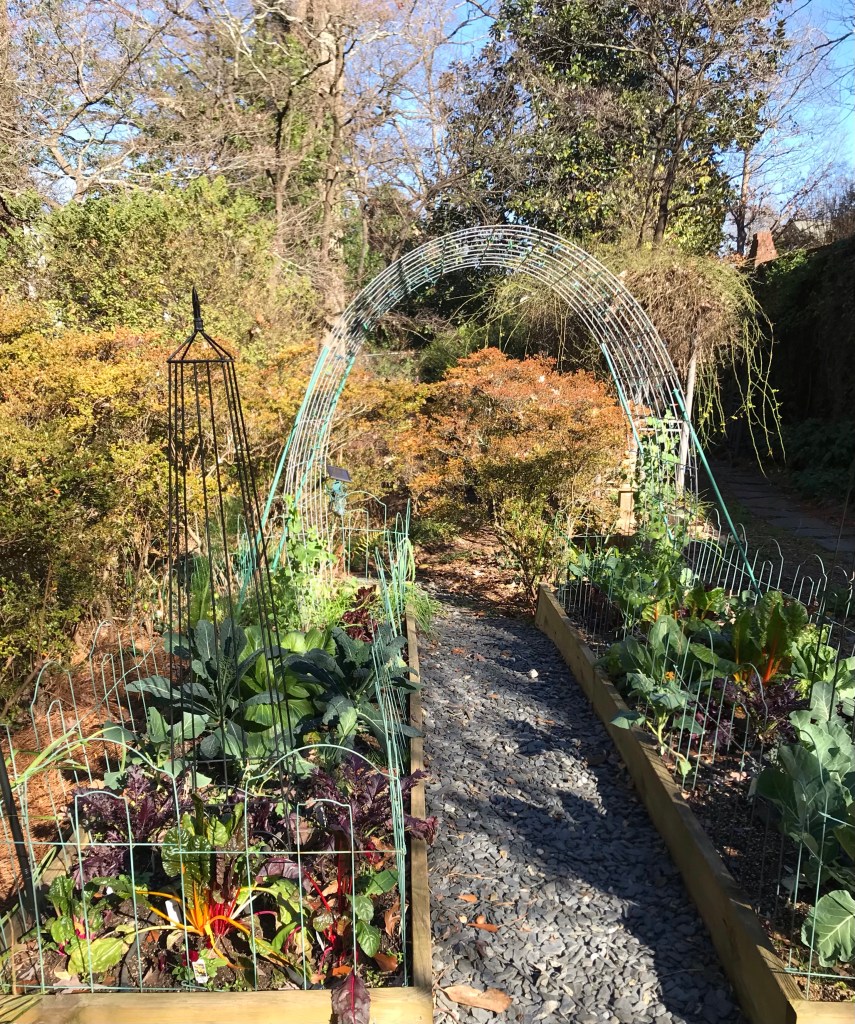
Well, my winter vegetable garden looked great this fall and winter — until we got temps at or below 10 degrees Fahrenheit for two nights in a row, a few weeks ago!
How it started …How it’s going.
Almost everything collapsed in a heap of frozen mush. So last weekend, I cleared out the debris, leaving a few hopeful stems that were still green in case they might sprout leaves again. Even my parsley died! The Bull’s Blood beets seem to have survived; the pansies will come back; a couple of kale plants are trying to regenerate. That’s all, folks! Sigh. Even the Swiss chard gave up the ghost.
Interestingly, some of the lavender in another part of the garden has survived very well (“Phenomenal”). The “Black Scallop” ajuga around it looks discouraged but not defeated. I will probably plant more cool weather vegetables in a while, but not until February at the earliest. Any suggestions? I’m in Zone 7, in Atlanta, Georgia.
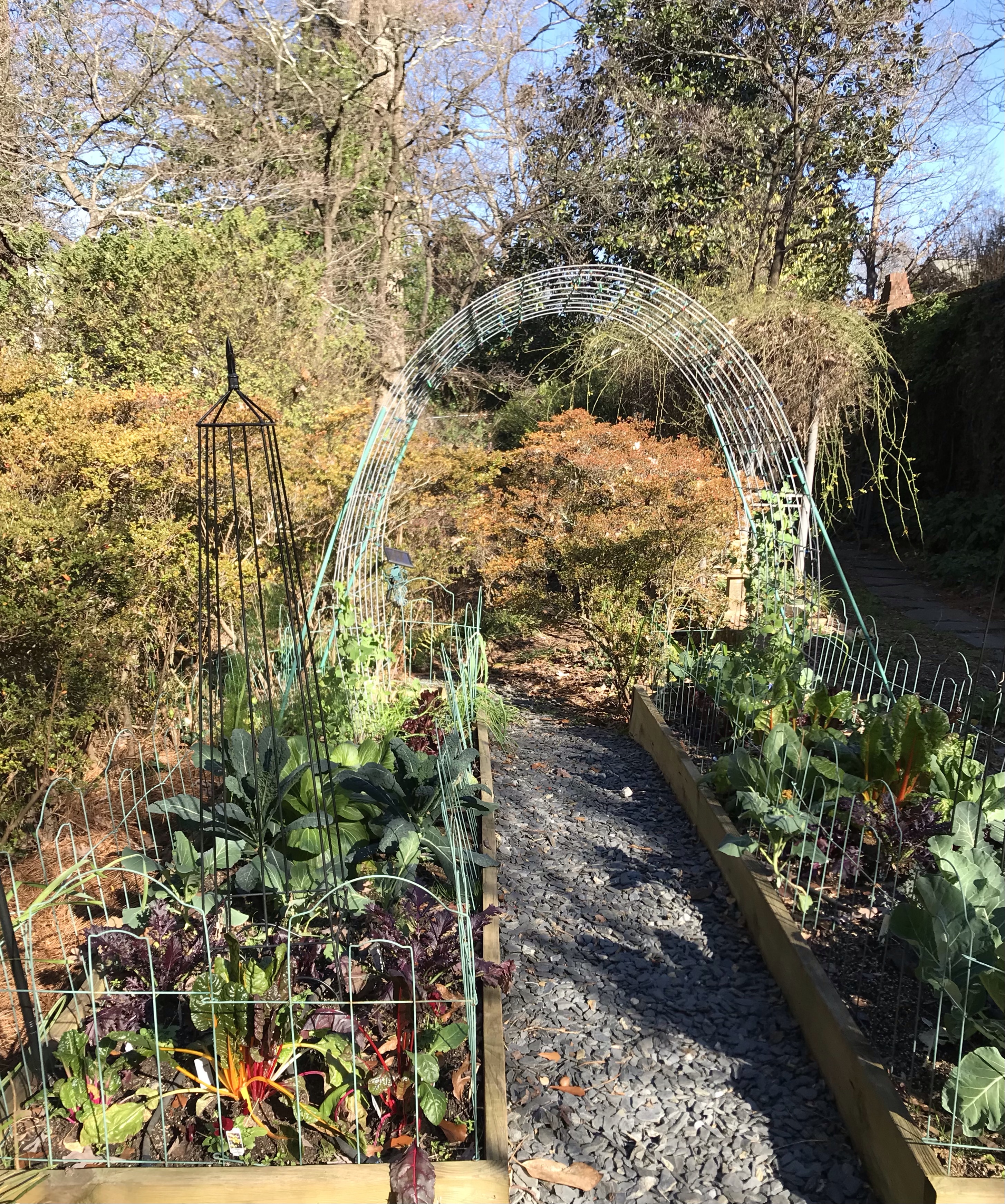
I’m quite pleased with how well my winter vegetable garden is doing. I love planting all the colorful winter leafy greens, like rainbow chard, red romaine, purple mustard, “Bull’s Blood” beets, different kinds of kale. I’m even growing cauliflower whose heads will be orange or purple! I have a few pea vines, mostly for their looks although they are thriving. I learned a year ago that it takes a LOT of pea plants to get enough shelled peas for one meal! I also enjoy planting pansies among the vegetables and herbs, as they will bloom all winter in this climate. Finally, there are many fewer weeds in the winter, at a level I can manage to keep under control.
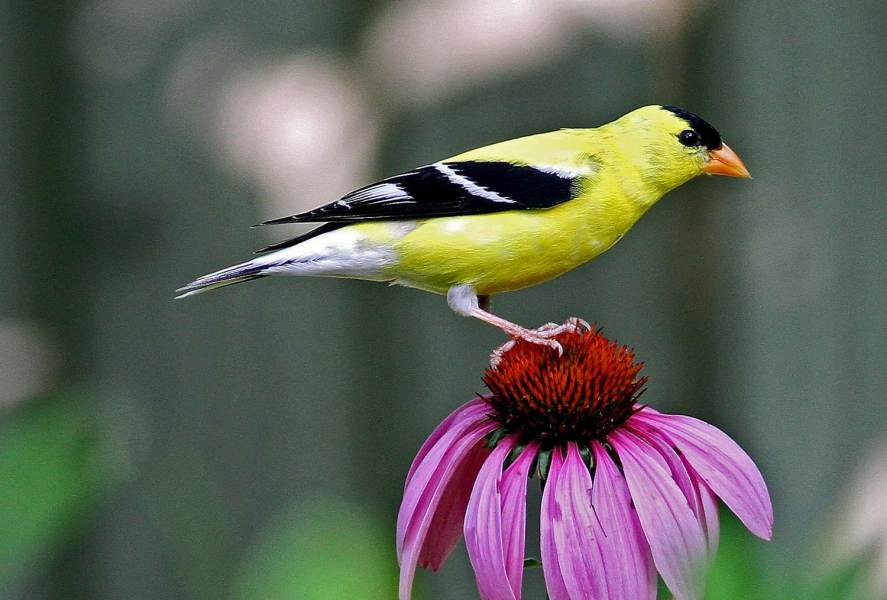
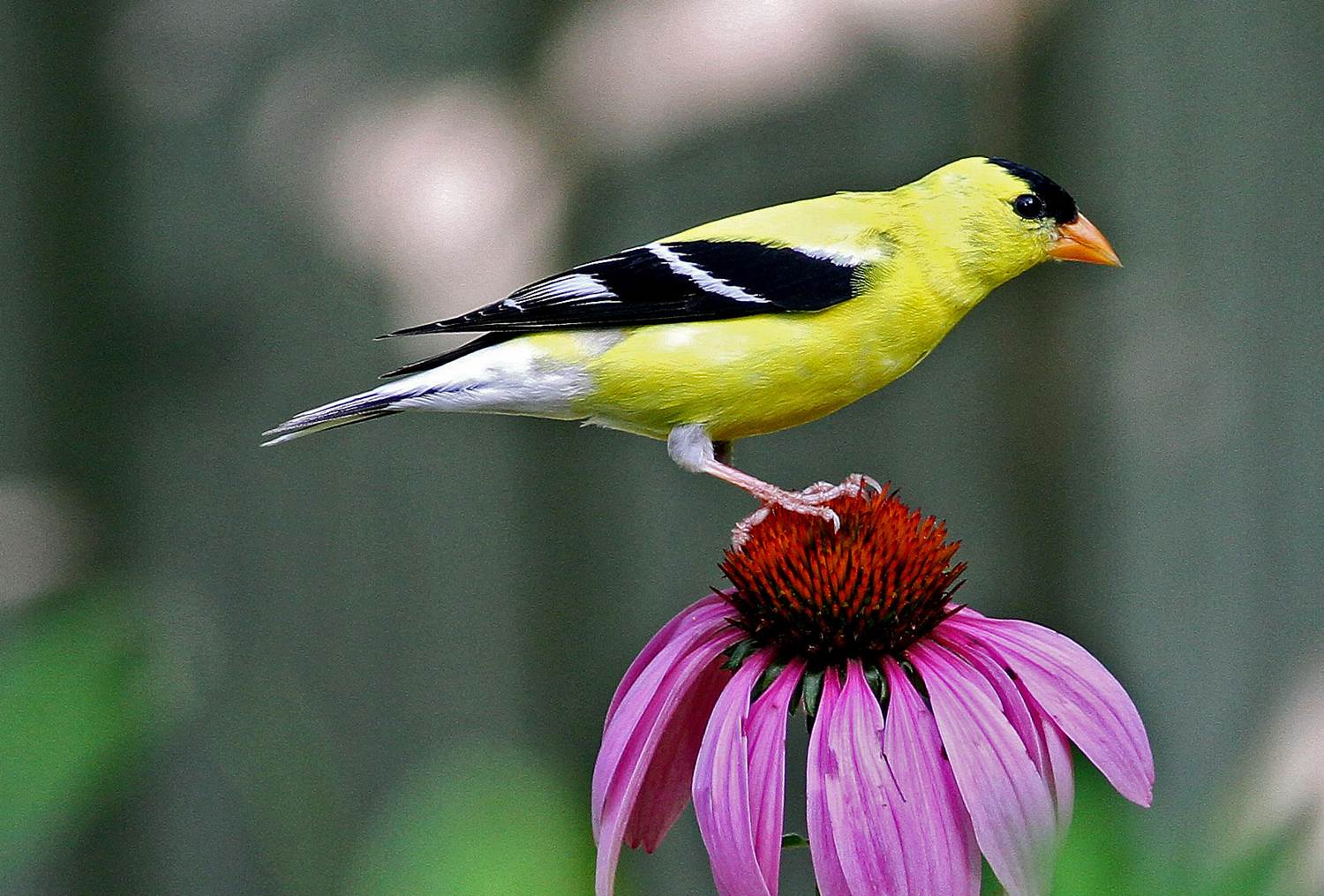
Here we are in mid-August, and between my two-week absence to visit my dear father-in-law in New England and the plentiful rain and heat, the weeds are running rampant in my garden. However, the same conditions mean the several coneflowers I added to a flowerbed this spring and summer are also flourishing, and this weekend I spotted a pair of goldfinches among them, feeding on the seeds! Although I’ve had a few coneflowers in the same bed for a while, I’ve never seen goldfinches visiting, so this was a real treat.
Like many bird-lovers, I took down feeders this spring at the advice of various organizations, because of the current outbreak of avian flu that is having a particularly bad impact on wild birds. The more they are encouraged to congregate (like at a feeder), the easier it is for them to become infected. I’ve missed the colorful presence of the usual cardinals, wrens, and others, so you can imagine my delight when a goldfinch couple appeared: the vividly yellow male, and the yellowish brown female. I hope they stay around!
I’ve been planting more and more flowers and other plants that appeal to birds and pollinators. They are also beautiful — the bed where I’ve added coneflowers has a soft sunset/twilight color scheme, because it catches the late afternoon sun, and coneflowers now come in many pretty shades of pink, coral, purple, etc. that blend beautifully with the daylilies I have there. The ruby-colored monarda I planted years ago seems to have come into its own this year, and is spreading nicely; it has been visited regularly by hummingbirds and butterflies, who also appreciated the flowering vines I had in my vegetable garden last summer. (I planted fewer this year, because last summer’s bean vines took over the whole bed!). Our small back yard already has many bird-and-bug-friendly features, like plenty of tree cover and areas where leaf litter is undisturbed. Sadly, though, we no longer see fireflies in the back of our garden as we used to. I blame the ubiquitous mosquito-spraying in our area.
We drove up almost the entire Eastern seaboard to visit my FIL in New Hampshire, and the whole way up and back, I couldn’t help wondering WHY so few interstates include plantings of native wildflowers, in spite of the Federal Highway Administration’s wildflower programs. I saw hundreds of miles of grass along the sides and up the middle of highways. Imagine if more, even most, of those miles were planted with native milkweeds and other highway-tolerant wildflowers for the endangered monarch butterflies and other pollinators! I know there is a partnership among several states to plant monarch-friendly flowers along the “Monarch Highway”, Interstate 35 — I wish there was a similar partnership along Interstates 95 and 85. If there is one, I didn’t see any evidence of it, though I appreciate the wildflower plantings on Interstate 16, the highway that leads to the coast.
Does your area actively cultivate wildflowers along public rights of way?
Goldfinch on purple coneflower; image by Will Stuart, from audubon.org
In last Friday’s Perfume Chat Room, I posted this: Perfume Chat Room, March 11. Despite this weekend’s sudden freeze, the flowers that were already blooming have survived nicely, except (of course) the camellia blossoms. I rescued several of the pink “Debutante” blooms yesterday to bring indoors before the frost got them.
My garden is about to enter its most glorious season, when the Coral Bells azaleas burst forth, the hellebores are still in bloom, and the dogwoods begin to flower. It is also before the weeds get going, and I can still imagine myself as having some control over them!
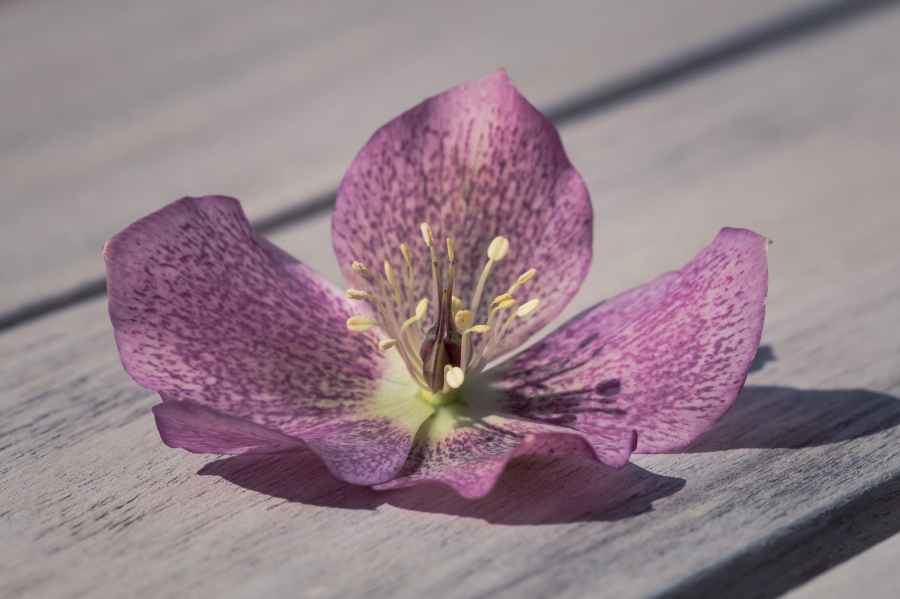
A timely piece by Anne Wareham, about the hellebores that are starting to bloom.
We probably all love hellebores, but some people seem to like them leafy and some people like them naked. And sometimes the plants themselves seem to come kind of in-between. Aren’t they glorious? So why de-leaf? The biggest reason may be Leaf Spot. I really know nothing about this – we may have it, or…
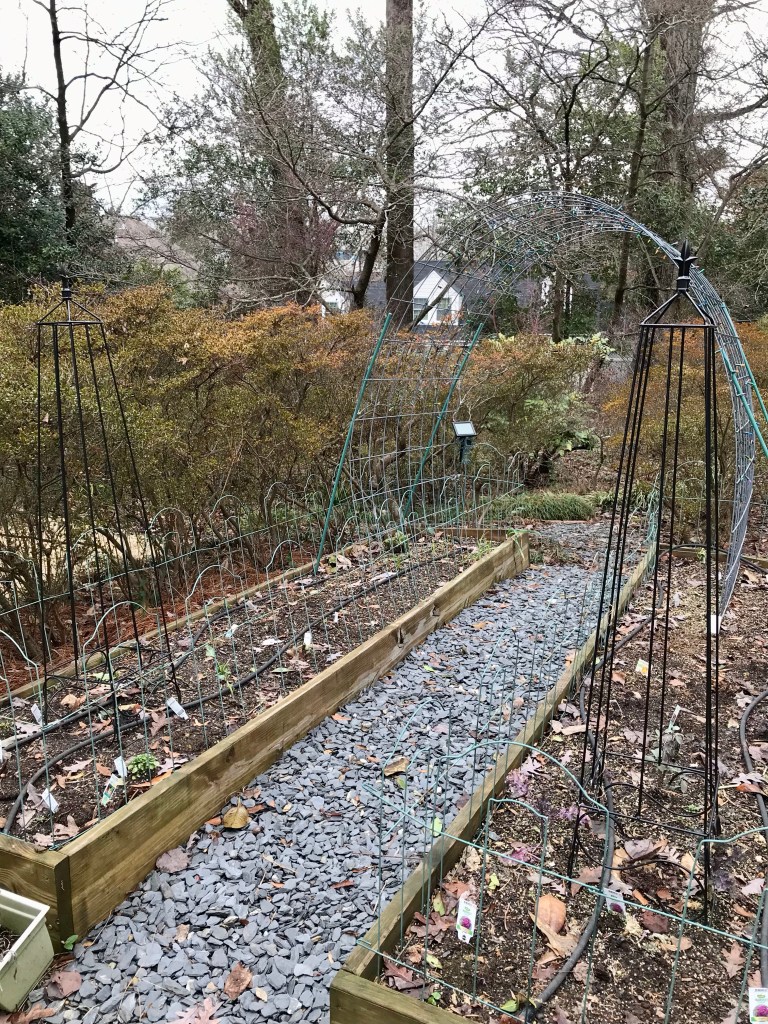
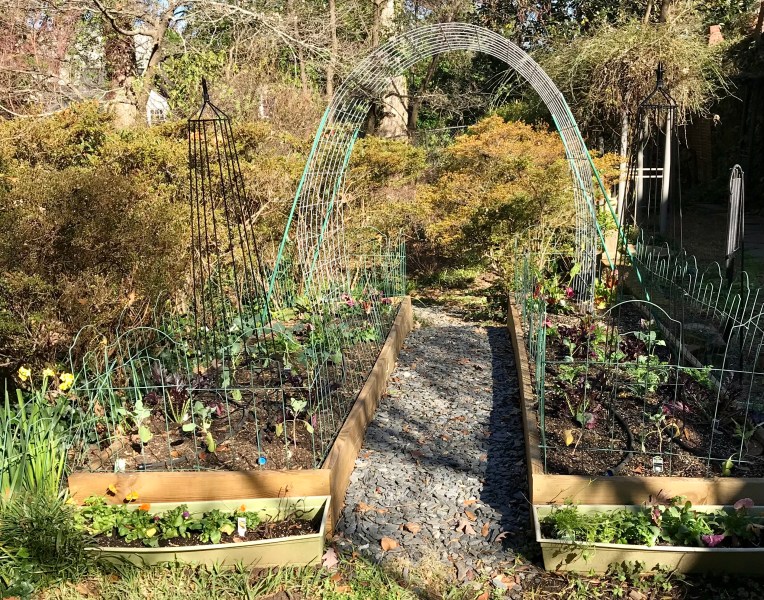
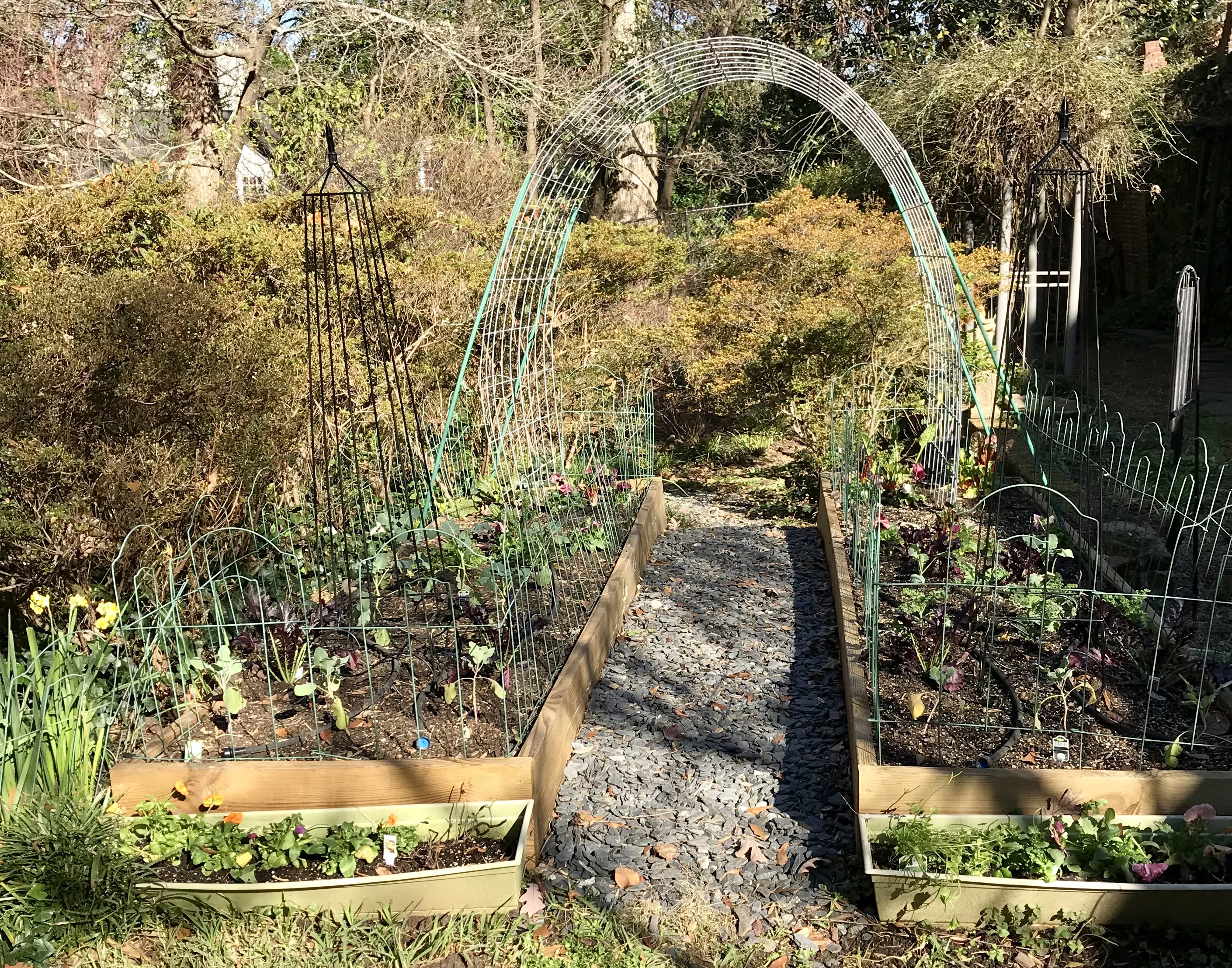
My replanted winter vegetable garden! Some of you may recall that I had high ambitions, last summer, of posting regular snapshots of my summer vegetable garden in the new raised beds I had built for my garden last spring. Alas! Between summer trips to see family, and a long, hot, wet summer, plus planting too many bean vines, my summer vegetable garden turned into a veritable jungle, complete with aggressive mosquitoes.
So this fall, we cleared the whole thing out, pulled hyacinth bean vines off everything (seriously, they went everywhere!), and started over with cool season vegetables and flowers. I have beets with gorgeous maroon leaves; Swiss chard with brightly colored stems; red mustard; curly kale; broccoli; cauliflower; parsley; and, of course, pansies.
Among my containers, I still have lots of herbs that are flourishing; and several roses that have decided to embark on a third or even fourth flush of bloom. Yes, we’ve had unseasonably warm weather; and on Boxing Day, yesterday, it was in the mid-70s! No wonder my poor roses are confused. But the warm weather will help my vegetables get a good start rooting, I think, before it turns cold as expected in January and February.
Are you able to garden at this time of year? What will you grow? Happy New Year to all, and may 2022 bring us increases in health and happiness.
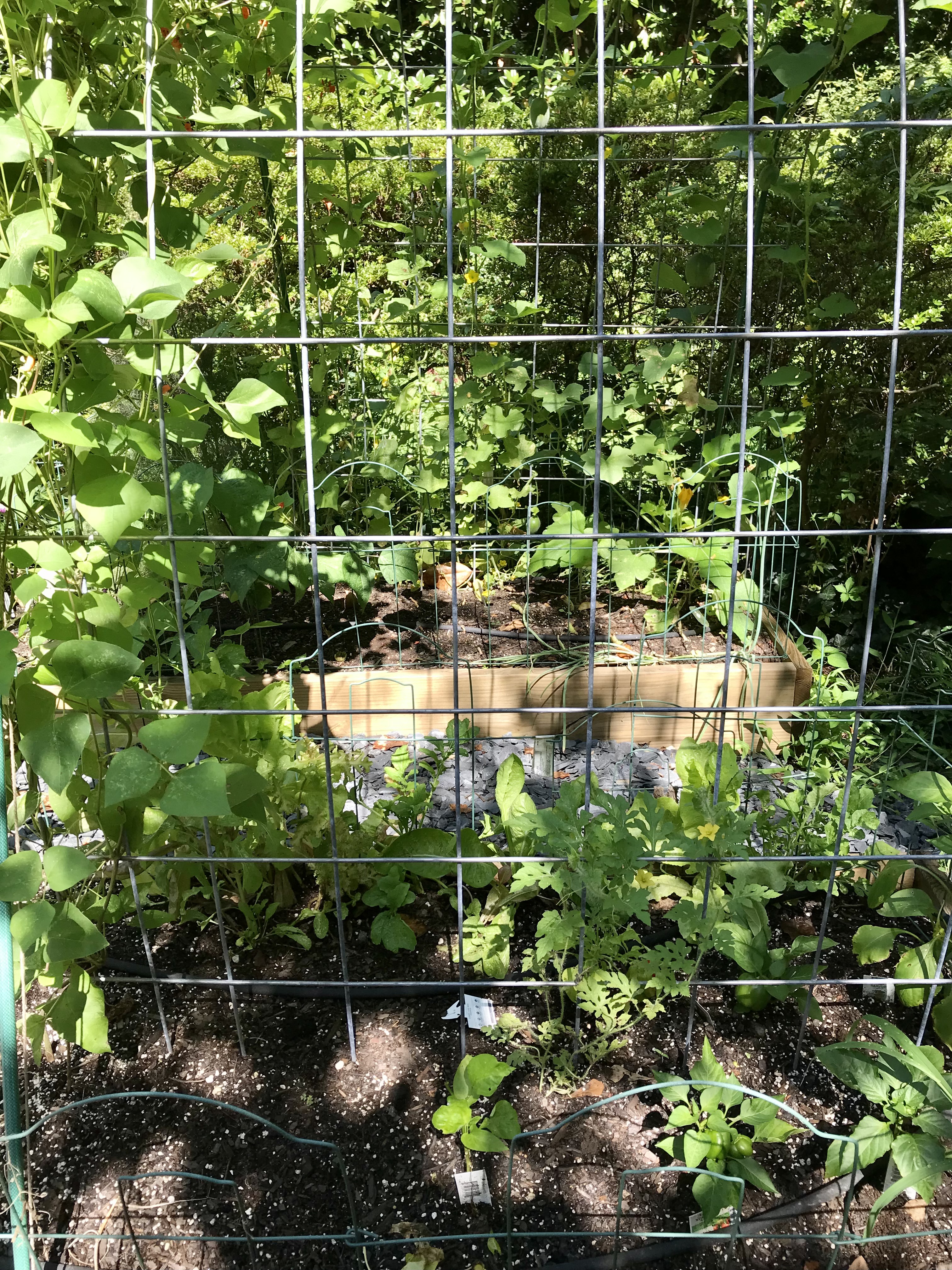
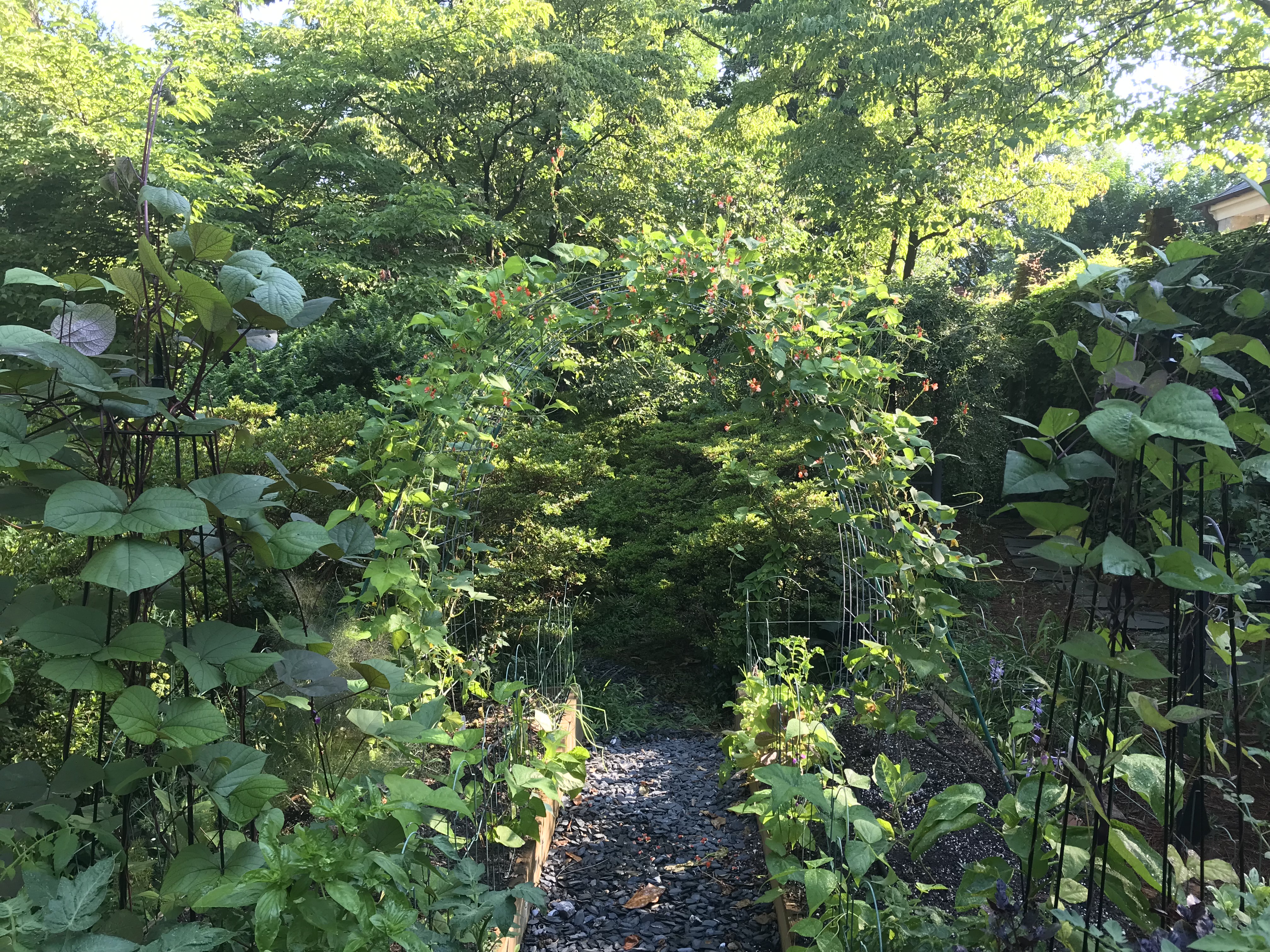
After two weeks when we were away in New England, the vegetable garden has grown a LOT! I’ve pulled out or cut back what remained of the peas and mustard greens, and will plant peppers. Bush beans, runner beans, and pole beans are all flourishing, as are the basil plants. Squash borers got one of my zucchini plants, so that has to be destroyed and replaced. Melon plants are already climbing up the arch. Tomato plants are setting fruit but it’s a race between us and the chipmunks! I let some volunteer seedlings grow outside the raised beds in hopes that they will draw the chipmunks. My daughter calls it ” the chipmunk tithe.”


 Old Herbaceous